What is vibe coding? How does it work?
May 22, 2026
/
Matleena S.
/
6 min Read
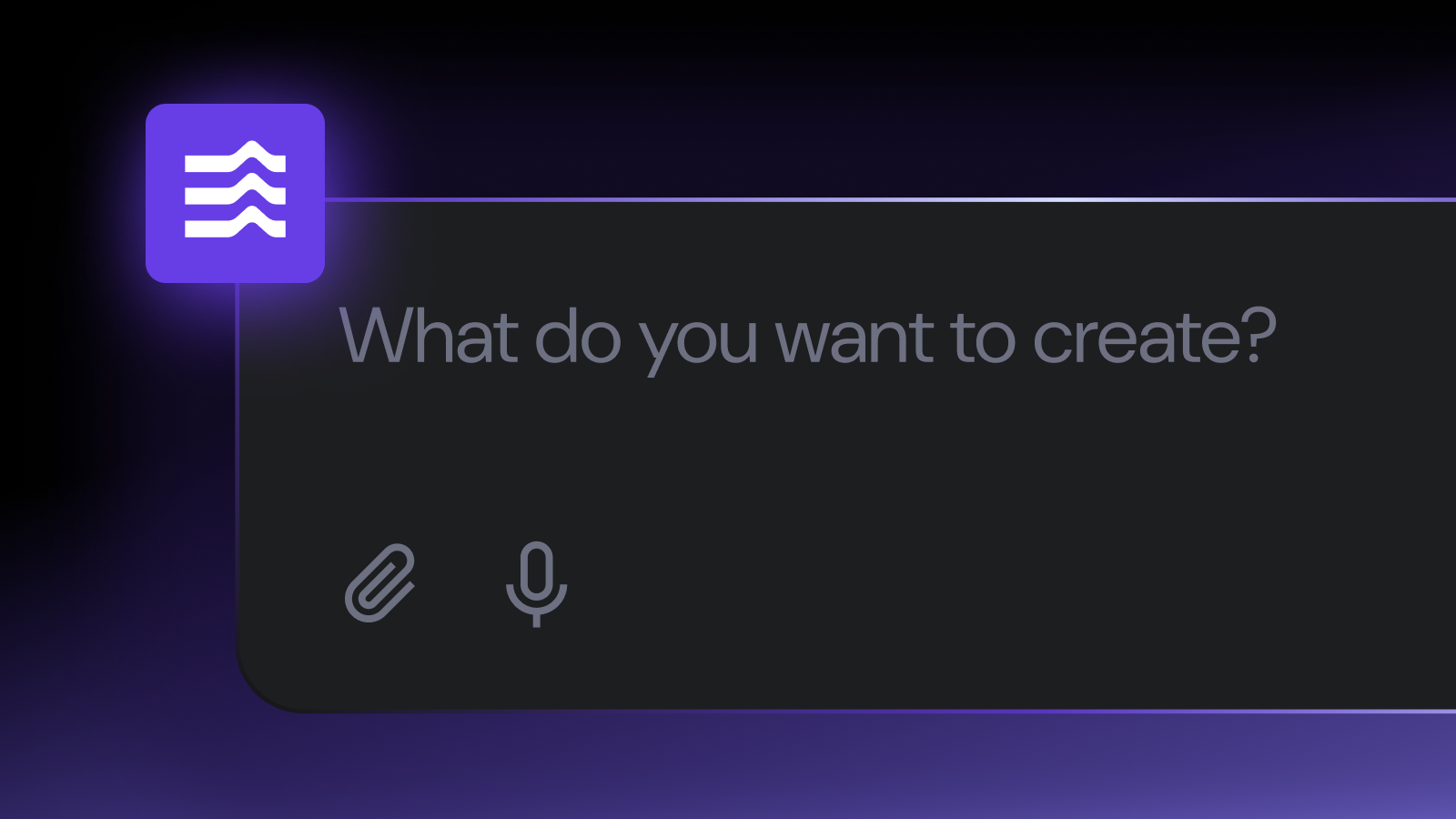
Vibe coding is a growing trend where developers use large language models (LLMs) to generate functional code by simply describing what they need in plain language. Instead of manually writing every line, they rely on AI to translate natural language into executable code.
The term Vibe coding originates from a post on X by Andrej Karpathy, an influential AI expert known for his work at Tesla and OpenAI, where he explains the concept as:
“You just vibe with the AI. Prompt, get code, run it, see what breaks, try again, edit a bit, paste it in, iterate. You don’t need a spec. The spec is in your head. You just build.”
Check out this quick video to discover everything you need to know about vibe coding.
Let’s break down what vibe coding actually is, how it works, and why more creators are trying it.
What are the benefits of vibe coding in AI?
If you’re wondering why this approach has gained so much traction, it’s because vibe coding offers some real advantages – especially for solo developers and fast-moving teams when the right ai app builder is selected. The main benefits of vibe coding include:
- Speed – Vibe coding automates repetitive tasks like setting up files, writing boilerplate, and handling basic data logic.
- Creativity – With routine coding out of the way, you can focus on design, user experience, and solving real problems.
- Accessible for beginners – No need to learn syntax first — just describe what you want, and the AI builds it.
- Easy to iterate – Quickly test changes by tweaking your prompts instead of rewriting code manually.
- Fast prototyping – Great for turning ideas into working demos without getting stuck in the technical details.
Which coding platforms help with AI-powered vibe coding? Platforms like Hostinger’s Vibe code builder make it possible to create websites, web apps, and more using plain language — saving time and lowering the technical barrier.
How is vibe coding different from traditional coding?
The main difference between vibe coding and traditional coding is how the code is written. With vibe coding, you describe what you want in natural language, and the AI generates the code for you. Traditional coding, on the other hand, requires writing code manually in languages like Python, Java, or C++, following a structured and technical process.
Vibe coding is faster and easier to start with — ideal for quick prototypes, simple websites, or early-stage apps. Traditional coding takes more time and skill but offers greater control, performance, and long-term reliability, especially for complex or security-sensitive projects. For a full breakdown, check out our detailed guide on how vibe coding compares to traditional programming.
Is vibe coding secure?
Apps you develop with vibe coding can be secure if you apply the right safety measures. AI-generated code may be vulnerable and should not be implemented without testing.
Here’s how to keep your AI-created code safe:
- Review the code carefully before running it, either through manual inspection or by requesting your AI coding assistant to do so for you.
- Don’t use vibe-coded tools in production without audits.
- Use sandbox environments for testing.
- Validate inputs and handle errors properly.
How does vibe coding with AI work?
Vibe coding works by using AI assistance to write code based on your natural language prompts, letting you build software through fast, iterative feedback loops.
There are two main ways to vibe code:
- Use all-in-one tools like Hostinger Horizons – These platforms let you build complete applications just by prompting. You describe what you want (for example, “a booking app with calendar integration”), and the system generates the front and back end for you. You don’t see the actual code – only the working result. This is the most beginner-friendly way to code with AI.
- Use AI coding assistants like ChatGPT, Copilot, or DeepSeek – With these tools, you can be more hands-on. You write prompts like “create a login form in Python using Flask” and the AI returns the code snippet. You then run the code, see what breaks, ask the AI to fix it, and repeat. This style of programming with AI gives you more control over the tech stack and output.
In both cases, the workflow looks something like this:
- Prompt the AI with your idea
- Review and run the generated code
- Debug or refine the output with follow-up prompts
- Repeat until the app or feature works as expected
This cycle of rapid testing and tweaking replaces traditional planning, making development feel more like a creative process than a technical task.
Vibe coding AI tools often come with features like chat-based IDEs, one-click testing environments, built-in deployment, and easy integration with APIs – all designed to streamline the way you code and publish with AI.
Examples of vibe coding in action
Watch our colleague Elisabeth deploy a fully functioning web app in under one hour using just one AI web-building tool.
You can find vibe coding in action on projects where creators build tools or experiments quickly without writing every line of code themselves.
For example:
- A podcaster builds a clip generator with AI.
- A creator makes a web form that automatically posts submissions to Notion.
- A freelancer sets up a chatbot that replies to FAQs.
Vibe-coded apps might not be polished, but they can perform the intended task – and that’s often more than enough for personal use, small teams, or sharing with your communities.
To get better results with vibe coding, focus on writing clear, specific prompts that describe exactly what you need. Instead of saying “Build a website,” try “Create a one-page website for a freelance designer with sections for portfolio, services, and contact form.” The more detail you include—like layout, features, or style—the closer the output will match your expectations. For example, rather than “Make a login page,” say “Build a login page with email and password input, ‘Forgot password’ link, and a submit button that shows a success message.” If the result isn’t right, tweak your prompt by adding or rephrasing details until it improves.
What are the best practices for AI-powered vibe coding?
While vibe coding is flexible by nature, following a few smart habits can help you get better results and avoid common pitfalls.
For effective vibe coding, follow these rules:
- Keep prompts short and clear – Don’t overexplain. Start simple.
- Test often – Run code in small chunks, not all at once.
- Use real examples – Give the AI real data or scenarios.
- Know when to stop – If it’s not working, rewrite your prompt or start fresh.
- Keep backups – Save working versions before trying new changes.
Why vibe coding matters for developers
Vibe coding allows you to build real, working apps without needing to learn full-stack development or rely on a technical team.
Vibe coding enables effective development for solo creators, freelancers, and small teams that need to move quickly. Whether you’re launching a side project, building custom tools, or testing a startup idea, vibe coding gives you a way to:
- Prototype instantly – You can test ideas within hours, not weeks. No need to wireframe, spec out features, or write boilerplate code. Just describe what you want, and let AI build the first version.
- Build tools that solve your niche problems – Many creators end up building simple apps to automate tasks, speed up workflows, or deliver value to their community. You don’t have to wait for someone else to build it.
- Experiment without pressure – Vibe coding removes the fear of breaking things. You’re not working on production systems—you’re building quick solutions in a low-stakes environment. This empowers your creativity.
- Free up focus – Spend more time on design, user experience, and solving real problems.
- Supports lean teams – Solo developers or small teams can build and launch without needing large engineering resources.
If you’re a creator who’s tired of hitting technical roadblocks or waiting for dev resources, vibe coding can help you move forward faster.
How to get started with vibe coding on Hostinger Horizons
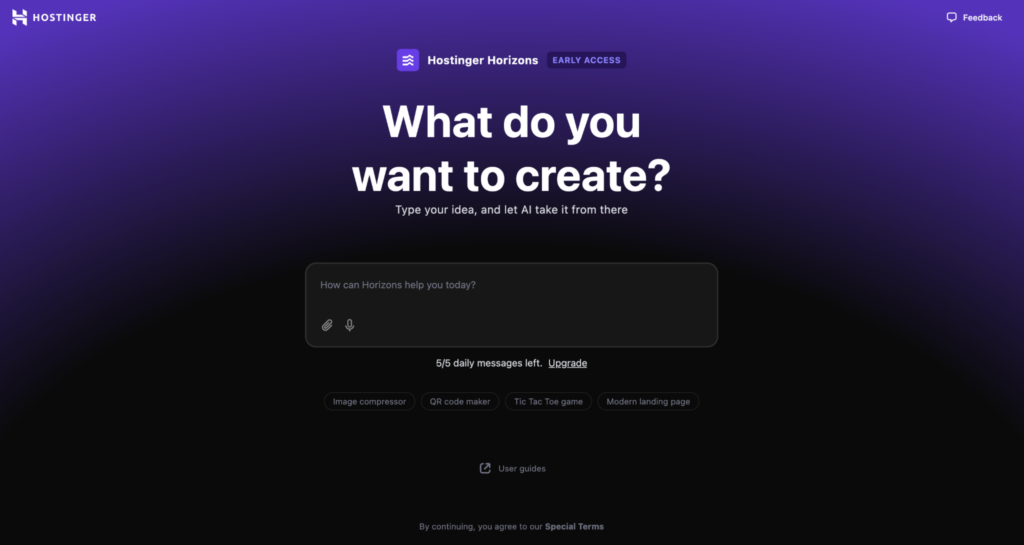
Hostinger Horizons makes it easy to start building, even if it’s your first time vibe coding a website. It’s a no-code, AI-powered platform that lets you describe what you want, and builds it for you in iterations.
You can use Hostinger Horizons to build all kinds of functional web apps, from personal productivity tools to small business platforms. Many creators are using it to launch micro-SaaS projects, client-facing tools, or websites. And since the platform includes hosting and publishing, you can build, customize, and sell your app all in one place.
Here’s a quick overview to start your first project:
- Open Hostinger Horizons – Head to Hostinger’s AI web app builder to get started. A free trial is available, so you can explore the builder before committing.
- Describe your idea – Use natural language prompts to tell the AI what you want to build.
- Preview and customize – Adjust layout, design, and features on the fly.
- Test and iterate – Use live preview to tweak functionality before publishing.
That’s it. You can go from idea to functional prototype in minutes.
Limitations of vibe coding tools and how to overcome them
Vibe coding has its limits – it’s not always accurate, scalable, or structured. Here are common limitations and how to deal with them:
- Messy code – AI might generate inefficient or hard-to-maintain code.
→ Clean up as you go and keep things modular. - No long-term structure – Projects can become chaotic.
→ Add structure once your prototype works. - Debugging can be hard – Fixing errors might require deeper knowledge.
→ Ask the AI to explain the bug before fixing it. - Security gaps – AI might skip validation or safety checks.
→ Always test thoroughly and use sandboxed environments.
The future of vibe coding
Vibe coding will grow as AI tools improve and more creators experiment with building their own software. It’s already popular in indie hacker and maker communities on Reddit and Hacker News. By 2026, it’s expected that 75% of new applications will be built using no-code tools, aka by, vibe coding. We don’t expect it to replace traditional coding anytime soon – it’s great for speed and experimentation, however, not. yet for scaling or reliability.
Still, as AI gets smarter and web development tools evolve, vibe coding might become a new standard for creative development. Think of it as a playground for ideas – fast, flexible, and just a little bit messy.
All of the tutorial content on this website is subject to Hostinger's rigorous editorial standards and values.

Matleena is a seasoned Content Writer with 5 years of content marketing experience. She has a particular interest in emerging digital marketing trends, website building, and AI. In her free time, Matleena enjoys cups of good coffee, tends to her balcony garden, and studies Japanese. Follow her on LinkedIn