How to sell jewelry online and build a successful business
Mar 24, 2026
/
Tamara J.
/
14 min Read
Selling jewelry online in India involves choosing a profitable niche, sourcing products locally or through suppliers, setting up payments like UPI and Cash on Delivery, and selling through marketplaces, social media, or your own website. You can start small with a budget of ₹5,000–₹20,000 and scale as demand grows.
You can sell jewelry through platforms like Amazon, Flipkart, Meesho, Instagram, or build your own online store for better branding and higher margins. Popular niches include artificial jewelry, daily wear accessories under ₹1,000, and bridal sets for wedding seasons.
This guide explains how to select a jewelry niche, define your brand, source products, set up payments and shipping, register your business, and promote your store using Instagram and WhatsApp.
1. Select a jewelry niche
The first step in starting an online jewelry business in India is selecting a niche that matches local demand, pricing expectations, and platform trends. Your niche defines your brand positioning, product pricing, and the marketplaces or channels you sell on.
Research Indian marketplaces like Amazon.in, Flipkart, and Meesho to identify high-demand categories. Then validate trends using Google Trends and Keyword Planner to understand what Indian buyers actively search for.
Focus on niches that balance demand, affordability, and repeat purchases. In India, fashion and daily-wear jewelry drive higher sales volume than premium categories.
Here are the most relevant jewelry niches for the Indian market:
- Artificial (fashion) jewelry. Artificial jewelry generates the highest sales volume in India because it is affordable and trend-driven. Most products fall in the ₹300–₹1,500 range, making them ideal for impulse purchases and repeat customers. This category performs best on Meesho and Instagram.
- Bridal and wedding jewelry. Bridal jewelry has strong seasonal demand during wedding periods and festivals. These sets are often inspired by gold jewelry but made using imitation materials like Kundan or Polki. Prices typically range from ₹1,500 to ₹10,000 depending on design complexity.
- Daily wear jewelry. Lightweight and minimal pieces like chains, studs, and bracelets sell consistently year-round. This niche targets working professionals and students looking for affordable accessories under ₹1,000.
- Gold-plated jewelry. Gold-plated items offer the appearance of real gold at a lower price point. These products are popular among buyers who want premium-looking jewelry without high costs. Brass or alloy with gold plating is commonly used.
- Handmade jewelry. Handmade jewelry attracts niche buyers who value customization and craftsmanship. This category works well on Instagram and for small brands but scales slower due to manual production.
- Oxidized and silver jewelry. Oxidized jewelry is popular for ethnic wear and festive occasions. It is widely sold in local markets and online, especially in the ₹200–₹800 range.
- Body jewelry. Products like nose rings, anklets, and toe rings have consistent demand in India due to cultural usage. This niche targets both traditional buyers and younger audiences.
- Sustainable or handmade ethical jewelry. Eco-conscious jewelry made from recycled materials or crafted by hand appeals to urban buyers, but demand is smaller than for fashion jewelry.
Choose one primary niche instead of selling everything. A focused niche improves branding, simplifies inventory, and helps you stand out on crowded platforms like Amazon and Meesho.
2. Define branding and product attributes
The next step in starting an online business is to define your jewelry company’s branding and product attributes based on your target audience, price range, and sales channel. A clear brand helps you stand out on crowded platforms like Instagram, Amazon, and Meesho.
To build a brand that stands out from competitors, jewelry business owners must determine their brand positioning by outlining their unique selling proposition (USP). The USP should also define the value your products bring to customers.
Create a USP for your jewelry business by answering these questions:
- Who is your ideal customer (college students, working women, brides)?
- What price range do you target (₹300 daily wear or ₹2,000 bridal sets)?
- What problem does your product solve (affordable fashion, wedding styling, gifting)?
- What makes your brand different (designs, pricing, fast delivery, customization)?
Your USP should be clear and specific. For example: affordable gold-plated jewelry under ₹1,000 for daily wear.
Use this USP to guide your branding elements such as logo, packaging, Instagram profile, and website design. Consistent branding improves trust and helps customers recognize your products quickly.
Define your product attributes clearly for every item. Indian buyers expect detailed specifications before purchasing, especially on marketplaces.
Include these key attributes:
- Material type (alloy, brass, silver-plated, gold-plated)
- Stone type (Kundan, American diamond, beads)
- Weight (in grams)
- Size or dimensions (length, diameter)
- Price range (₹300–₹1,500 or ₹1,500–₹5,000)
- Occasion (daily wear, festive, bridal)
- Care instructions (avoid water, store in dry box)
You can also refine your niche further using your USP. Instead of selling general fashion jewelry, position your brand more specifically, such as oxidized daily wear jewelry under ₹800 or bridal Kundan sets for the wedding season.
A focused USP and clear product attributes make your listings easier to understand, improve conversions, and help your brand stand out in India’s competitive jewelry market.
3. Design and source your jewelry
The next step is designing and sourcing your jewelry based on your niche, budget, and business model. In India, most beginners start with low-investment sourcing methods before moving to custom production.
If you plan to create jewelry yourself, you can source materials from Indian wholesale markets and online platforms. Popular options include local suppliers in cities like Jaipur, Mumbai (Zaveri Bazaar), and Delhi (Chandni Chowk), as well as online platforms like Amazon India.
Handmade jewelry works best for niche categories, such as customized or artisanal pieces. However, it requires skills such as beadwork, stone setting, and finishing. This model offers higher uniqueness but is harder to scale.
Most sellers in India choose to source rather than manufacture. There are three main options:
- Reselling (wholesale sourcing). Buy jewelry in bulk from local wholesalers at lower prices and resell online. This is the most common model for beginners, especially for artificial and oxidized jewelry.
- Dropshipping. A supplier handles inventory and shipping while you focus on marketing. This model is less common in India for jewelry due to quality control issues and longer delivery times.
- Private label. Work with a manufacturer to create custom designs under your brand. This approach helps build a long-term brand but requires higher upfront investment.
When choosing suppliers, evaluate these factors:
- Product quality. Check samples for finishing, plating quality, and durability. Low-quality products lead to high return rates.
- Pricing and margins. Ensure you can maintain at least 30–50% margin after platform fees and shipping costs.
- Minimum order quantity (MOQ). Many Indian suppliers allow low MOQs, which is ideal for testing products.
- Delivery timelines. Faster delivery improves customer satisfaction, especially for festival and wedding orders.
- Customization options. Suppliers offering design changes or branding (tags, packaging) help differentiate your store.
You can source jewelry from:
- Local wholesale markets (Jaipur, Mumbai, Delhi)
- B2B platforms like IndiaMART and TradeIndia
- Manufacturers for bulk or private label orders
Choosing between local and overseas suppliers depends on your priorities. Local sourcing offers faster delivery, easier communication, and better quality control. Overseas sourcing (e.g., Alibaba) provides lower prices and more variety but involves longer shipping times and less control.
Most successful jewelry sellers in India start with local wholesale sourcing, validate demand, and then move to private label production to build a stronger brand.
4. Make an online store to sell jewelry
After sorting out your niche, brand attributes, and jewelry supplier, it’s time to build an online jewelry store.
For this, you’ll need to choose a website-building platform as well as purchase web hosting and a domain name.
Select a website building platform
There are many ways for jewelry business owners to sell jewelry online, such as via a content management system (CMS) like WordPress or an online marketplace like Amazon.
However, WordPress can take time to set up since you’ll need to install plugins to unlock eCommerce functionality.
Meanwhile, although online marketplaces offer ease of use, your online store won’t look professional. It’s also harder to stand out from the competition since your items will be listed alongside other merchants’ products.
As such, the best and easiest way to market your online jewelry business is by creating your own store using a website builder. For that, we recommend the AI-powered Hostinger eCommerce Website Builder.
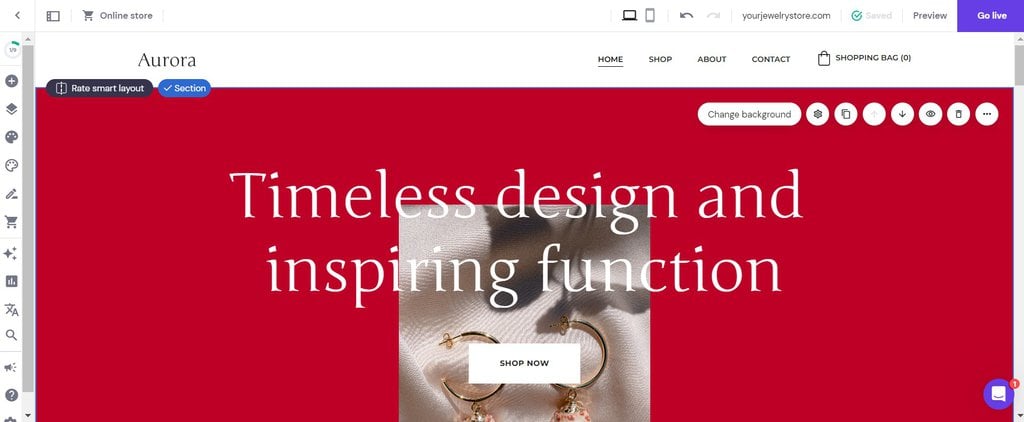
Unlike WordPress, where users will have to purchase web hosting and a domain name separately, Hostinger Website Builder provides all the essentials within a single platform. So, this all-in-one solution is perfect for beginners, entrepreneurs, and busy business owners.
Some standout features of Hostinger’s online store builder are:
- Hosting and domain included. From just ₹249.00/month, you can get unmetered traffic, claim a free domain valued at $9.99, and create up to 100 websites. Plus, site owners get a free business email account.
- Built-in eCommerce functionality. List up to 500 products and manage them with ease using the platform’s order tracking and inventory management dashboard.
- Extensive payment gateways. Unlock 20+ payment gateways, like Stripe and PayPal, and start selling online immediately – with zero commission fees.
- Fully customizable. Choose from a curated collection of mobile-friendly website templates and design the site to your brand’s specifications. It’s also possible to set discounts and customize the store’s checkout page.
- AI-powered solutions. Access our suite of AI tools like the AI Logo Generator and AI Writer to speed up the website-making process. You can also describe your jewelry brand in a few words and let the AI generate a completely custom site from scratch.
- Search engine optimization (SEO) ready. Take advantage of the sitemap generator as well as built-in alt text and meta editor to get your website content ready for search engines.
- Marketing integrations. Track your eCommerce platform’s performance with third-party tools like Google Analytics, Hotjar, Facebook Pixel, and Google AdSense.
- 24/7 support. All Hostinger customers get access to round-the-clock expert support. You can contact our Customer Success team through email or live chat via hPanel.
We also provide advanced security features to ensure safe and encrypted transactions. These features include Cloudflare-protected nameservers, automatic backups, a built-in malware scanner, and SSL certificates.
You can check out the platform’s intuitive drag-and-drop editing interface by accessing the Hostinger Website Builder demo page.
Get a suitable domain name for your jewelry brand
Your site’s domain name will become the web address of your online jewelry shop. It’s also a crucial branding element that can impact potential customers’ opinions of the site.
The perfect domain name is short and easy to remember. It may also include a relevant keyword, such as fine jewelry or gold jewelry, to help drive traffic.
Here are the steps on how to buy a domain name:
- Find a credible registrar. The company should be accredited by ICANN. If you are using Hostinger Website Builder, simply claim your free domain name.
- Search the domain database. Run a domain name search to check its availability. Make sure no other websites or businesses have claimed the name to avoid any trademark or copyright issues.
Register your domain name. Enter your contact details, verify domain ownership, and ensure to point the domain to your host’s server.
Check out our comprehensive tutorials to help you select the perfect domain name:
What Is a Domain Name? A Beginner-Friendly Guide
How to Choose a Domain Name That Will Stand Out
5. Add jewelry products to your online shop
It’s now time to list your jewelry products to start selling online. While creating a product catalog on your eCommerce platform may seem straightforward, there are some crucial aspects to consider.
First, you must categorize the products accordingly. Grouping each piece of jewelry based on its style or material will make the product pages more comfortable to navigate.
Then, you’ll need to write engaging product descriptions and upload high-resolution product images. This will highlight the jewelry’s details and unique features, which can help drive conversions.
We also recommend adding try-on options. If possible, consider utilizing AI technology to let customers virtually try on your jewelry. By enabling visitors to test the products themselves, they are less likely to have doubts about making a purchase.
To add jewelry products to your Hostinger Website Builder eCommerce store, enter the online store management area from the editing interface. You can find the Online store button on the top-left corner of the page.
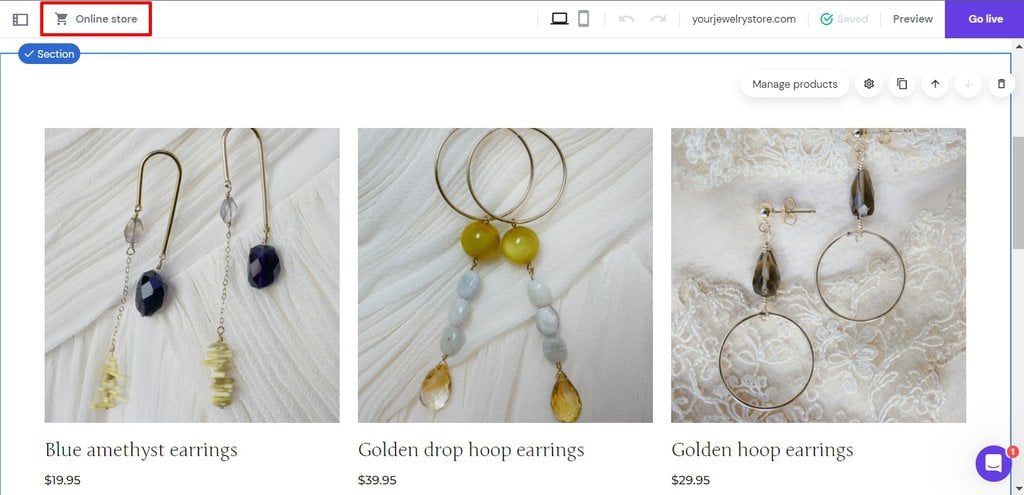
From there, head over to the left navigation bar and click on Products. You’ll then find some placeholder items listed based on the chosen template.
To edit or delete the listing, click on the three-dotted icon on the right-hand side. To add more jewelry items, click on the black Add Product button at the top of the page.
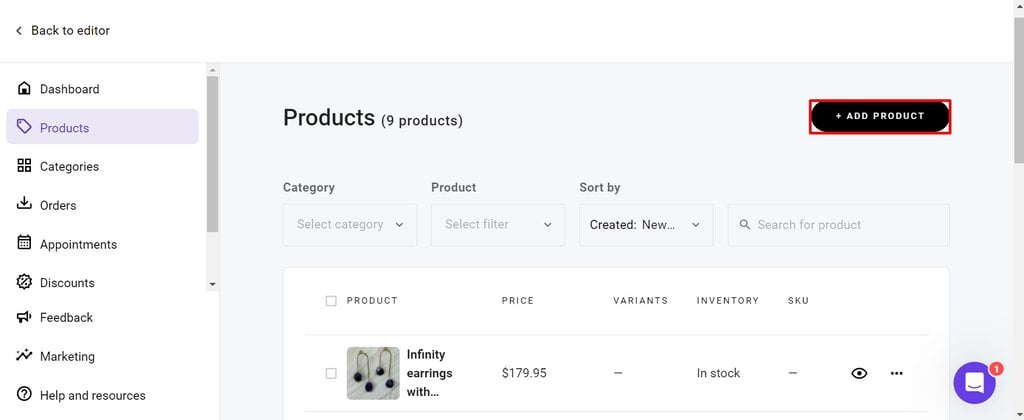
Under Choose product type, select Physical. Then, enter the jewelry item’s product title, description, and price. You can also add product variants, like colors or sizes, under Options. Don’t forget to upload a product image, then hit Save.

6. Set up payments and shipping
The next step is setting up payment methods and shipping options that match Indian customer preferences. Offering the right payment and delivery choices directly impacts conversion rates and trust.
Start by enabling multiple payment methods. In India, customers expect flexible options, especially mobile-first payments.
The most important payment methods to include are:
- Cash on Delivery (COD). Essential for building trust, especially for new stores and first-time customers.
- UPI (Google Pay, PhonePe, Paytm). The most widely used payment method in India for quick transactions.
- Debit and credit cards. Required for higher-value purchases.
- Wallets. Paytm and other wallets are still used by some buyers.
Without their preferred transaction method, customers may abandon their shopping cart, harming your store’s conversions.
Some platforms, like Hostinger Website Builder, already have integrated payment gateways – the availability of which depends on your location and currency.
For example, if you want to enable Stripe, you can check the supported currencies based on the transaction method.
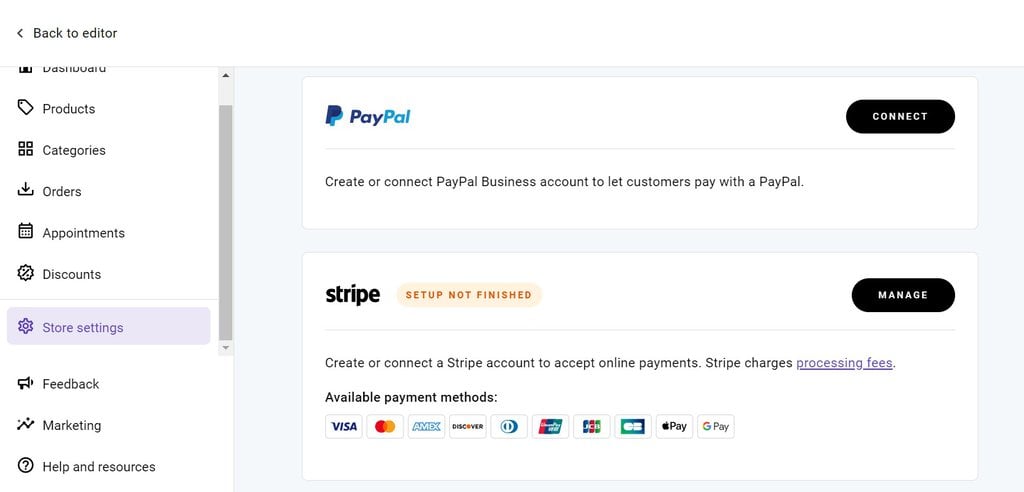
Hostinger Website Builder supports multiple payment gateways depending on your region. For India, integrate providers that support UPI and local payments. Always review transaction fees, which typically range from 2% to 3% per transaction depending on the gateway and payment type.
Once payments are set up, configure your shipping strategy. Reliable and transparent shipping is critical for jewelry due to its value and fragility.
Here are the most effective shipping methods for India:
- Free shipping. Increases conversions, especially for products under ₹1,000. You can include shipping costs in the product price.
- Flat rate shipping. Charge a standard fee (for example, ₹50–₹100) across locations to simplify pricing.
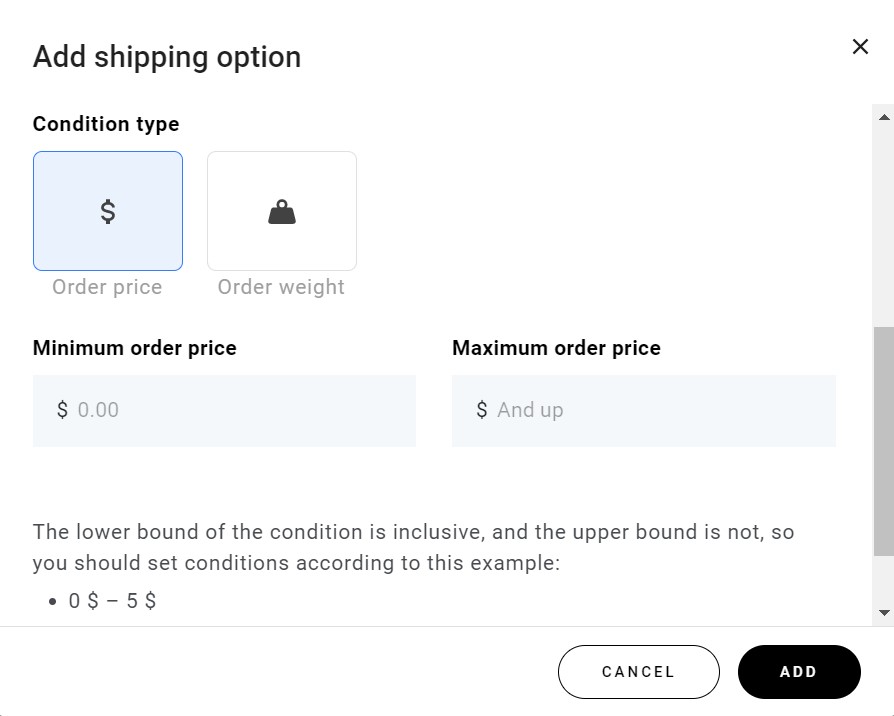
- Calculated shipping. Adjust shipping costs based on weight, location, or order value to protect margins.
To set up shipping on Hostinger Website Builder, head to the online store management area and click on Store settings → Shipping. Here, you can add different shipping zones and edit the pricing conditions – for example, by order price or weight.
Once that’s sorted, it’s time to publish the site. Head back to the Hostinger Website Builder editing interface and click the Go live button on the top-right corner of the screen.
7. Obtain the licenses and get incorporated
The next step is registering your business and ensuring you meet basic legal requirements to sell jewelry online in India. The structure you choose affects taxation, compliance, and how easily you can scale.
The most common business structures in India are:
- Sole proprietorship. The simplest option for beginners and small sellers starting from home. It requires minimal setup and is ideal for selling via Instagram or WhatsApp.
- Partnership or LLP (Limited Liability Partnership). Suitable if you are starting the business with partners and want limited liability protection.
- Private limited company. Best for scaling brands that plan to build a long-term eCommerce business with higher investment.
Most beginners start as sole proprietors and upgrade later as the business grows.
To sell jewelry online on major marketplaces like Amazon, Flipkart, or Meesho, you must obtain a GSTIN (Goods and Services Tax Identification Number). This is mandatory regardless of your revenue when selling through these platforms.
Here are the key registrations and requirements:
- GST registration (GSTIN). Required for listing products on marketplaces and claiming input tax credit.
- Business registration. Register as a sole proprietorship, LLP, or private limited company depending on your scale.
- Current bank account. Needed to receive payments from marketplaces and payment gateways.
If you are selling independently through Instagram, WhatsApp, or your own website at a small scale, you can start without GST initially. However, you will need GST registration as you scale or move to marketplaces.
If you run your business from home, ensure your operations comply with local municipal rules, especially if you handle inventory or bulk shipments.
Accurate registration builds customer trust, enables smooth payment processing, and lets you scale your jewelry business without disruptions.
8. Launch and promote your jewelry store
Preparing solid marketing strategies for online jewelry sales will set you off to a good start when launching your online storefront. It can help you stick to your business budget and determine the right steps to increase sales.
To ensure the brand’s success, determine your business objectives. Outline actionable goals and ensure they follow the SMART framework – specific, measurable, achievable, relevant, and time-bound.
Then, set a realistic budget. Don’t exaggerate your marketing funds if you are new to selling jewelry online. To start with, stick to free or affordable options like SEO and social media marketing.
As your online business grows, expand to paid marketing channels like influencer marketing and ads. You can also consider creating an affiliate marketing program to encourage loyal customers to promote your products on their personal blog or social media platform.
Additionally, adjust your marketing strategies depending on the target market for jewelry sales. Email marketing campaigns can be effective for returning customers. Meanwhile, promotional offers and coupons are excellent for attracting newcomers.
Common mistakes to avoid when selling jewelry online
If you want to sell online and optimize jewelry sales, avoid these common mistakes.
Having poor-quality product photos
One of the most important elements of setting up an online store for jewelry sales is ensuring your product images accurately represent the jewelry. That’s why having high-resolution product pictures is essential.
To take good product photos, invest in a high-quality camera and good editing software. Since you’ll be photographing jewelry, use a macro lens to properly capture the details. Other tips we suggest are setting up a clean background and using natural light.
Not setting competitive prices
The other important step is to price your jewelry competitively. Pricing products too high can be detrimental to your online business sales. On the other hand, pricing them too low can devalue the quality of your items.
Conduct thorough research to implement the best pricing strategies for online jewelry sales.
Consider taxes, shipping fees, labor costs, and the price of materials used in production. Don’t forget to also analyze the prices of similar products on various eCommerce platforms for jewelry sales.
Lacking brand identity
Failing to establish strong branding can negatively impact your eCommerce platform. In the saturated jewelry industry, newcomers with their own store need to determine their products’ unique value proposition.
To sell jewelry online, small business owners must do more than simply select a niche and target audience. The most successful companies also sell an idea or lifestyle that captures the brand’s essence while resonating with the target audience.
For this, start with your jewelry brand’s visual identity – consider logos and color schemes. Then, craft a strong brand personality and implement it throughout your website’s copy and visual elements.
Make sure to also expand this to other platforms like social media.
Ignoring customer feedback
One of the best ways to continuously improve your jewelry business is to listen to customers. Therefore, it’s crucial for small business owners not to ignore customer feedback or negative reviews.
Instead, use valuable consumer input to further improve the quality of your jewelry products. If you receive repeated negative feedback, it might indicate issues with the jewelry’s manufacturing.
If that’s the case, consider investigating further to see if it’s necessary to switch suppliers.
Having poor customer service
One way to optimize jewelry sales is to ensure customers are satisfied not only with the products but also your business. In fact, excellent customer service can be the deciding factor on whether buyers will make another purchase.
Studies show that 80% of customers are willing to pay a premium for a better shopping experience. So, start by crafting a policy for returns, shipping, and exchanges. This will establish clear expectations for customers when purchasing your jewelry.
Additionally, give consumers sufficient channels to contact you. Aside from email, we recommend incorporating a live chat feature to ease the user experience.
To further optimize customer service for online jewelry sales, respond promptly and professionally to all user inquiries.
Writing inaccurate product descriptions
False advertising is a foolproof way to damage your jewelry brand’s credibility and online reputation. Writing inaccurate product descriptions can lead to disappointed customers and lost sales.
To avoid that, business owners should produce accurate and compelling product descriptions. Aside from materials, focus on the benefits the product can bring customers.
This will show potential customers how your jewelry addresses their pain points.
Then, write persuasive copy to showcase the items’ value. It should be detailed, accurate, and informative. We also recommend utilizing keywords to help with SEO for online jewelry sales.
Great examples of successful online jewelry stores
In this section, we’ll look at some great eCommerce jewelry businesses made with Hostinger to demonstrate effective ways to sell jewelry online.
1. Fair Trade Jewelry – Meillya Jewelry
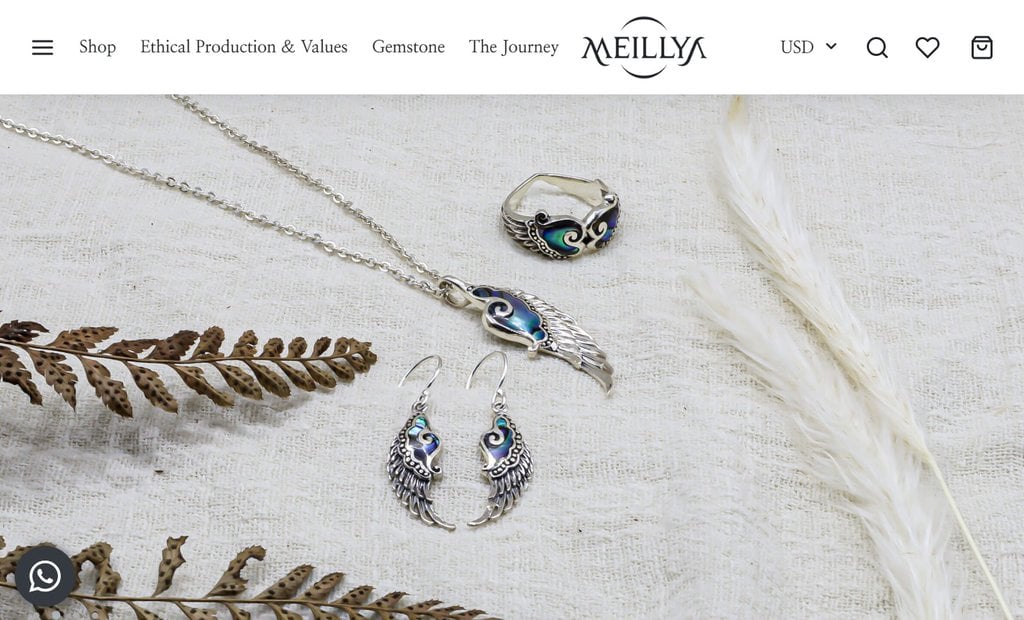
Meillya Jewelry is an ethical jewelry brand that sells quirky pieces. The collections are colorful, full of character, and inspired by the beautiful nature and rich fauna on the island of Bali.
To attract its audience, Meillya Jewelry’s homepage displays ethical production logos to demonstrate that the company produces fair trade products.
For example, it shows that the brand uses recycled silver and eco-friendly packaging for production and shipping.
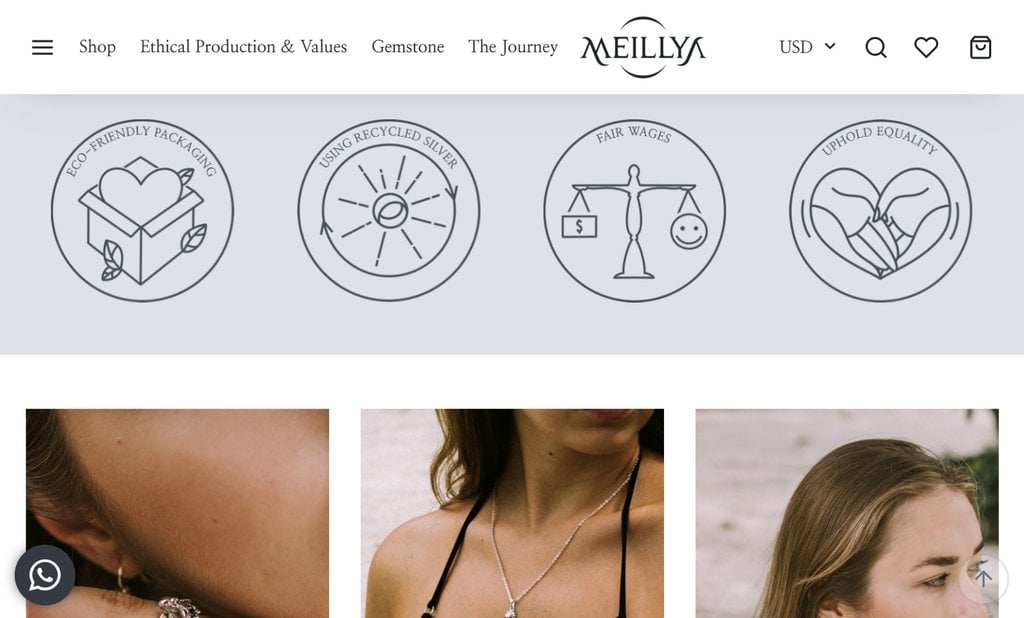
A notable branding feature of this Hostinger-built site is its Gemstone page. Meillya Jewelry provides users with a list of its precious stones and offers insights into the history of each gem’s popular uses in ancient times.
2. Handmade Jewelry – Monai
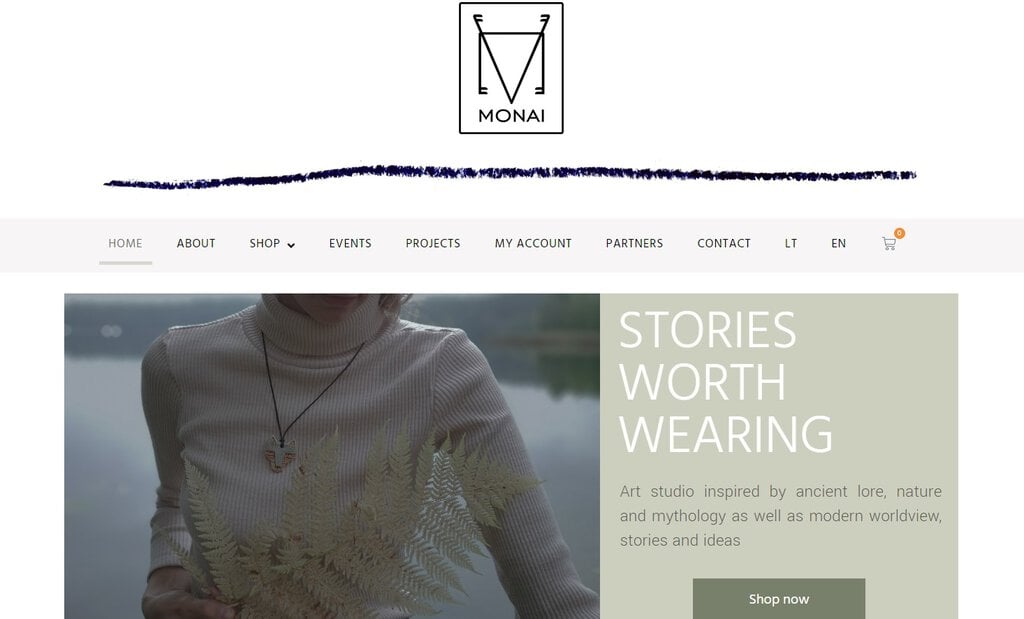
Monai is an excellent example of an independent, handmade jewelry brand. Influenced by ancient lore, its products are inspired by old mythology, symbols, and legends from different cultures and regions.
Built with Hostinger, this handcrafted jewelry site immediately introduces visitors to its brand image and story, representing its niche and attracting the target audience using effective copy.
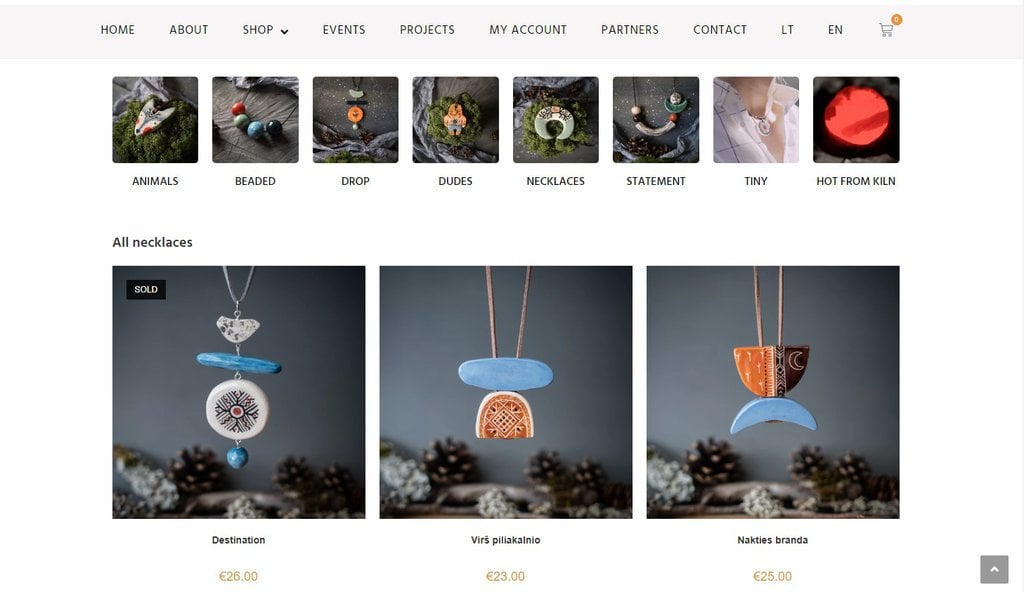
When users navigate to the product pages, they can see Monai’s one-of-a-kind designs. The company differentiates itself from competitors by tapping into a unique corner of the jewelry market by selling hand-painted ceramic pieces.
3. Vintage Jewelry – Petit Clay’s
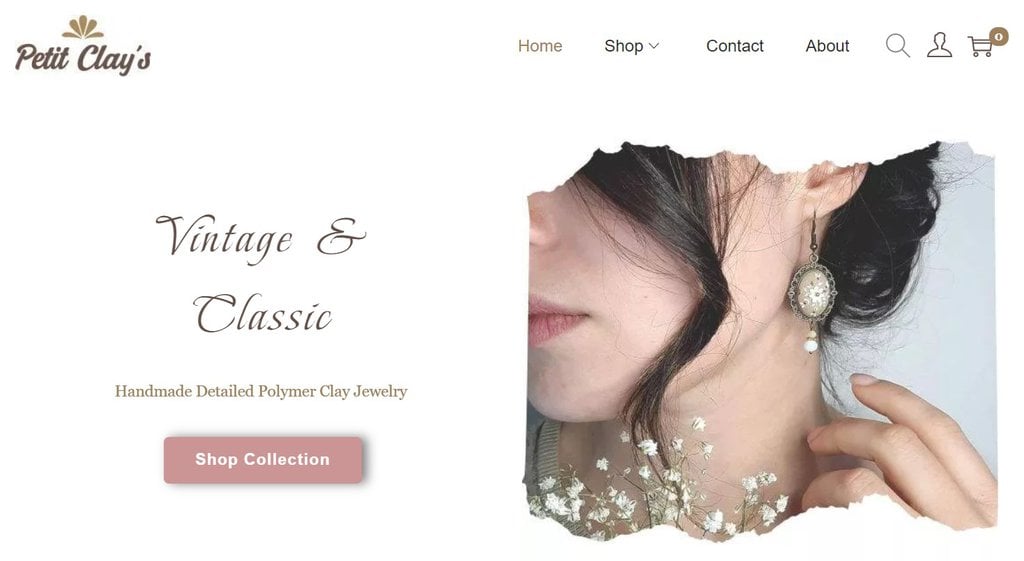
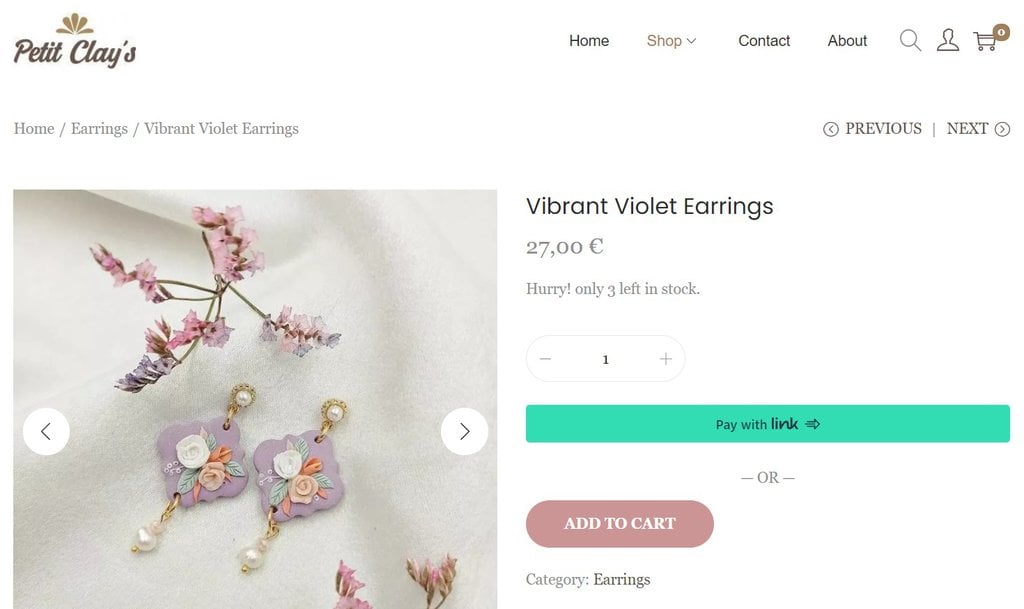
Petit Clay’s is a jewelry brand selling vintage-inspired pieces. The company effectively conveys its niche and branding using a clean website interface with soft hues.
To further emphasize the vintage feel, Petit Clay’s homepage uses a script font for the headline and a ripped-effect border for the featured image.
Another great example of a website built with Hostinger, the brand sells polymer clay jewelry pieces that are intricately made by hand. To make the jewelry business stand out from competitors, Petit Clay’s owner uses high-quality product pictures to make the details pop.
Check out the jewelry brands below to see more examples of the types of websites you can create with Hostinger:
Kalon Designs
Vishwakarma Jewellery
Yilmaz Fine Jewellery
AUDENTES Jewelry
neila nilow
LAU Creations
Conclusion
Selling jewelry online in India is a practical way to start a low-investment business and build a scalable brand. While marketplaces and social media help you get initial sales, creating your own website gives you full control over branding, pricing, and customer experience.
Here is a clear summary of the steps to start selling jewelry online:
- Select a jewelry niche based on demand, pricing, and target customers in India
- Define your brand positioning and product attributes to stand out
- Source jewelry through local wholesalers, manufacturers, or private label suppliers
- Create your online store using an eCommerce website builder
- Add detailed product listings with clear specifications and pricing in ₹
- Set up payment methods like UPI, cards, and Cash on Delivery, and configure shipping
- Register your business and obtain GST if selling on marketplaces
- Promote your products using Instagram, WhatsApp, and festival-based campaigns
Start small, validate your products, and scale gradually. Many successful jewelry sellers in India begin from home with a budget of ₹5,000–₹20,000 and grow through consistent branding and repeat customers.
As your business grows, focus on building your own website to reduce dependency on marketplaces and increase profit margins.
All of the tutorial content on this website is subject to Hostinger's rigorous editorial standards and values.

Tamara is a Content Editor and digital marketing enthusiast with 2+ years of experience in the IT industry. She loves sharing tips and tricks about SEO, web development, and eCommerce to help others navigate the online sphere. In her spare time, Tamara enjoys exploring new cities. Follow her on LinkedIn.