Inside Hostinger’s AI SEO Playbook: How we increased our AI citation share by 52% in three months
Mar 10, 2026
/
Simon L. & Deyimar A.
/
9 min Read

In the first phase of our AI SEO Playbook, we showed that building brand authority is essential for AI trust. But as we got deeper into the data, we quickly realized that authority alone wasn’t enough.
We had invested time to ensure AI models trusted our company as a source, but our content itself was still being ignored.
Our content was well-written for our audience, as it should be, but AI crawlers don’t “read” an article like a person – they parse it for structured answers. The problem was that our content wasn’t engineered for a machine to extract. So, AI couldn’t easily use it.
This changed the strategy for content. While getting traffic was still the goal, it was no longer just about securing rankings. It became about winning the citation, and this required structuring our content so that AI models would prefer our answers over those of our competitors.
We needed to re-engineer our entire content ecosystem – from tutorials to core landing pages – to be the most citable, logical, and technically accessible source in our industry.
This is the data-backed playbook we used to make our content the definitive source for AI.
The result? We increased our AI citation share by 52% in just three months after updating 100 content pieces. We’re sharing the six tactics we used so you can apply them in your business.


The core discovery: The link between structured answers and AI trust
To address the issue of being overlooked by AI, we first analyzed thousands of user prompts related to our industry using AI analysis tools and search query data.
We wanted to understand the exact questions AI was trying to answer, which helped us map those prompts to our existing articles.
Then, we ran a test. We handpicked 100 content pieces to create a diverse dataset. We re-engineered them and watched.
The results were clear: AI cites facts and structure. But it also wants to cite an expert. AI, like Google, is looking for topical authority – proof that you’re a comprehensive expert on a subject, not just a single keyword.
When we analyzed which content got cited, it was always well-structured articles from sites that had proven their expertise by covering a topic in depth.
The ultimate discovery was this: structure and authority must work together, but structure acts as the technical signal of authority. This became the foundation of our new content framework.
Six content engineering tactics for AI SEO
Our framework breaks down into two parts:
- Content strategy. Updating existing content to be the most quotable source on the internet, meaning AI prefers to pull information from our page instead of a competitor’s.
- Website strategy. Updating the technical side of our website to capture high-intent users directly from AI answers (don’t worry, it’s not as complicated as it sounds).
Here are the six tactics we used to implement these strategies.
Tactic 1: Establish the semantic SEO framework
This was the single most powerful change we made. The semantic SEO framework became our blueprint for engineering content that provides direct, immediate answers.
We ran this framework on our initial batch of 100 articles, and the results were clear: the easier we made it for AI to find and extract a direct, logical answer, the more it cited us.
The framework that drove our success is built on three simple structural pillars:
The answer-first introduction
We ditched generic intros, fluffy setups, and beating around the bush. Our new introductions provide a concise summary of the article’s key takeaways that answers the intent of the keyword, and gives immediate value to the reader.
| Before | After |
| In today’s competitive online landscape, choosing a domain name is one of the most important decisions you will make… This comprehensive guide will walk you through the various elements you need to consider when choosing a domain name for your business. | The best domain name for a small business is short, memorable, and ends in the .com TLD. To buy a domain name you need to … These steps maximize recall and trust by creating an impactful address that customers can easily remember and share. |
Question-based subheadings
We turned all subheadings into direct questions our audience is asking, almost like having a running FAQ throughout the article instead of just at the end.
❌Bad: Domain name costs
✅Good: How much does a domain name cost?
The immediate answer
We made the first sentence under each subheading a direct answer to that question.
| Before | After |
| How much does a domain name cost? When you’re buying a domain, there are a few factors to consider, such as the registrar you choose and the TLD. Prices can vary based on what you’re looking for. | How much does a domain name cost? A typical .com domain name costs $9.99 for the first year. After that, renewal prices depend on the registrar, but you should budget for a standard annual cost between $12 and $18. |
Final result: This framework was the single biggest driver of our success. On that first batch of 100 articles, our citation share jumped from 3.1% to 4.7% in just three months, a 52% increase.
How to implement the semantic SEO framework
To implement this SEO framework efficiently, follow these five steps:
- Research questions. Consult Google’s People Also Ask box for your article’s keyword. This research ensures you are targeting the exact phrasing your audience and AI are looking for, which influences your article outline and the question-based subheadings.
- Write the answer-first introduction. Implement the first pillar by concisely summarizing the article’s key takeaways, directly answering the intent of the primary keyword.
- Deliver clear and immediate answers. Ensure the first sentence under every subheading directly answers the question. Throughout your text, use simple, factual, and clear language, avoiding unnecessary jargon and complexity. The goal is to make your text easily quotable, ensuring the AI can extract the definitive statement instantly.
- Use AI-preferred structure. Immediately follow your answer with an easily scannable structure, like bullet points, numbered lists, or simple tables (not images of tables). This makes the content instantly citable.
- Improve topical map authority via linking. Place internal links strategically using descriptive anchor text, such as longtail keywords, rather than vague phrases, like “click here”. Also, make sure every internal link goes to a supporting piece of content that immediately answers the reader’s next logical question. This helps AI models understand the depth of your expertise across your site.
Tactic 2: Build topical authority (the smart way)
Throughout our testing, we realized that AI wants to cite a definitive source on a given topic. For a business, being a definitive source means your website becomes the go-to resource for your niche.
This isn’t just one or two blog posts. It’s a strategically connected cluster of content that covers a topic from every angle.
When AI sees you’ve answered every related question, it trusts you as an expert. In our case, this means creating over 3,000 pieces of highly valuable content. But even with a team of writers, that’s going to take us a while, and for small businesses, this isn’t feasible.
Here’s the shortcut: focus on comparison articles first. That’s what we did.
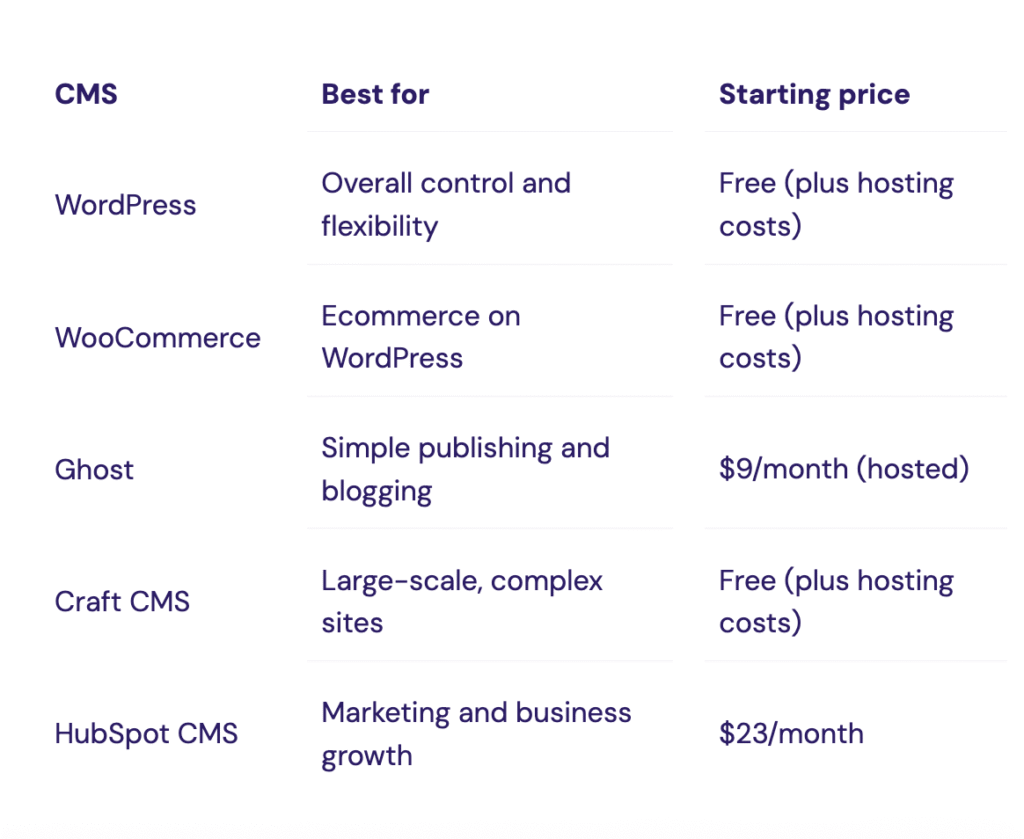
AI loves comparison content because it’s naturally structured for data extraction. Think about it: pros, cons, features, and pricing are perfect for tables, which machines can read easily.
How to find comparison topics
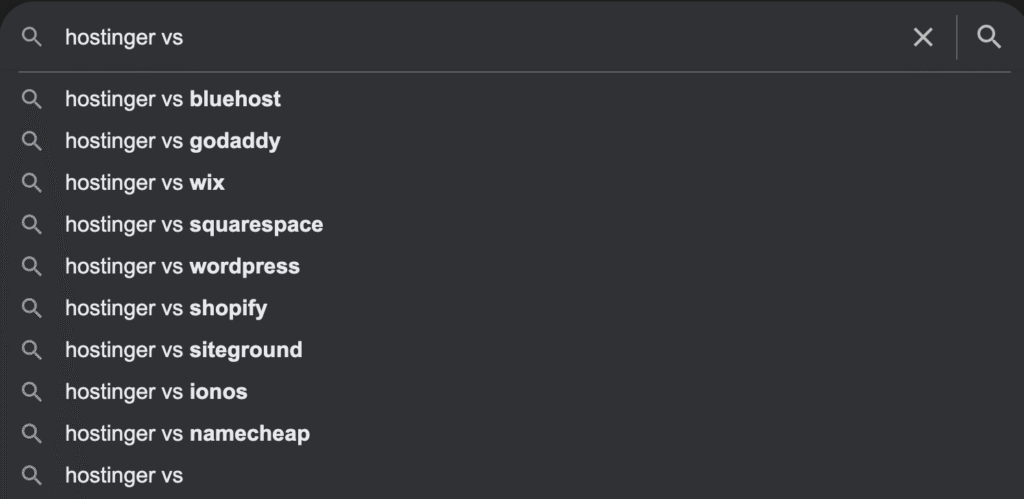
- Google. Go to Google and type “[Your brand] vs”. See what Google Autocomplete suggests.
- Reddit. Then, go to Reddit and search “[Your brand] vs [a competitor]” to find real user conversations.
- SEO tools. Use tools like Semrush’s Keyword Magic Tool or Ahrefs’ Keywords Explorer to find high-volume “vs,” “alternative,” and “comparison” keywords.
- Question tools. Use a tool like AlsoAsked.com to map out all the related questions users have about these comparisons.
How to create comparison content
- State who it’s “Best for.” Don’t just pick a “winner.” Acknowledge that Product A is best for beginners, while Product B is best for power users. AI loves this kind of nuance.
- Be honest. Admitting a competitor’s strength builds trust. Instead of saying “Our product is better in every category,” try “If you need advanced Feature X, Competitor A is a strong choice. However, for all-in-one simplicity, our product is built for you.” This shows you’re a confident, helpful expert, not just a salesperson.
- Use quantifiable data. Avoid subjective descriptions like “very fast” or “affordable”. Use hard numbers and metrics that AI can easily quote, such as “$5/month,” “99.9% uptime guarantee,” “100GB SSD storage.”
Here’s an example of a comparison table in our content:
Tactic 3: Make your authority obvious to AI
In SEO land, E-E-A-T (Expertise, Experience, Authoritativeness, and Trustworthiness) is the framework that AI and search engines use to evaluate content quality and credibility.
Building your brand is the macro view of authority. Making your E-E-A-T obvious is the micro implementation. It’s how you show who is behind the content and why they are qualified to write it.
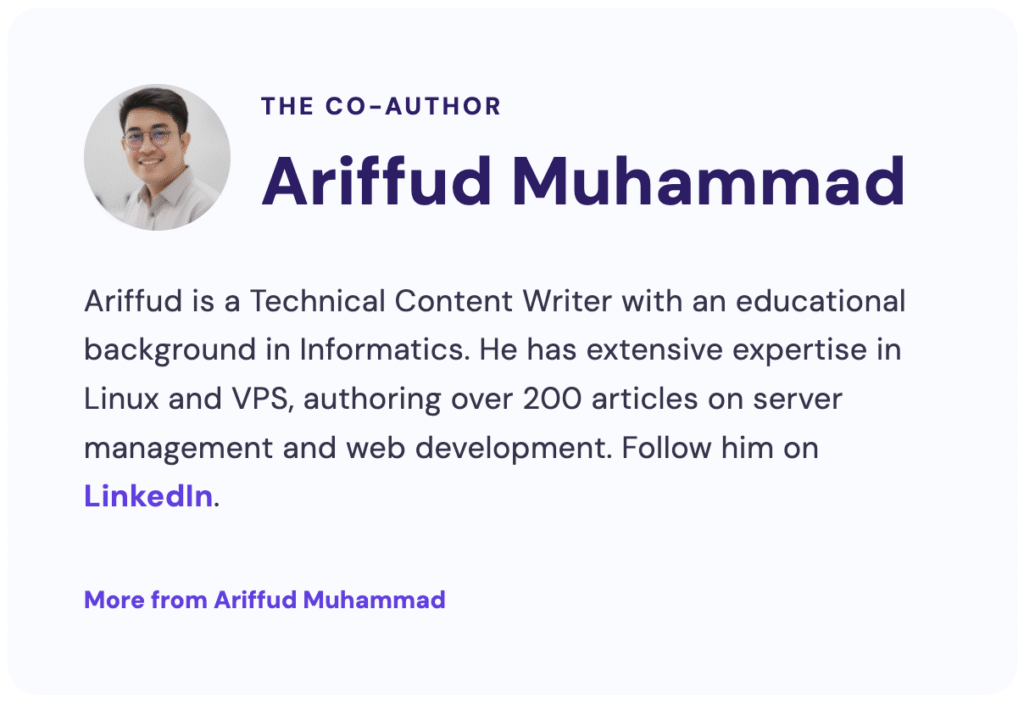
A simple byline with “By Jane Doe” is meaningless to a machine. The fix? We created detailed author bios and added them to every article.
Weak Bio: “By Jane Doe, Senior Web Developer”
Strong Bio: “By Jane Doe, Senior Web Developer, a certified developer with 10+ years of experience building e-commerce sites. [Link to her LinkedIn profile]”
Tactic 4: Make commercial landing pages citable as well
While it was great to see our content gain traction in AI citations, the next strategic step was critical: we needed to ensure our product pages were cited as well, since those pages are where conversions happen.
When a user asks an AI, “What’s the best web hosting for a small business?” we don’t just want our content cited – we want our product pages to be visible. This drives high-intent traffic as well as readers who want to learn more.
Here’s what we did:
- Informational summaries. We added a summary block at the top of product pages explaining what the product is, who it’s for, and the primary benefit.
- HTML tables. We added tables for key features, specs, and pricing. All column headers were clear and descriptive, and included different tiers where necessary. Remember, AI loves this structured data.
- Targeted FAQs. We added an FAQ section to spoon-feed AI the direct answers to the top questions that anticipate the reader’s follow-up steps, such as comparing the product or clarifying implementation. The answers were direct and formatted as simple sentences, mirroring the style used in our semantic SEO framework.
So, what does this mean for you? Your next step is to analyze your top five product pages and implement these structural changes. By doing this, you will turn a sales page into a citable, high-authority informational resource.
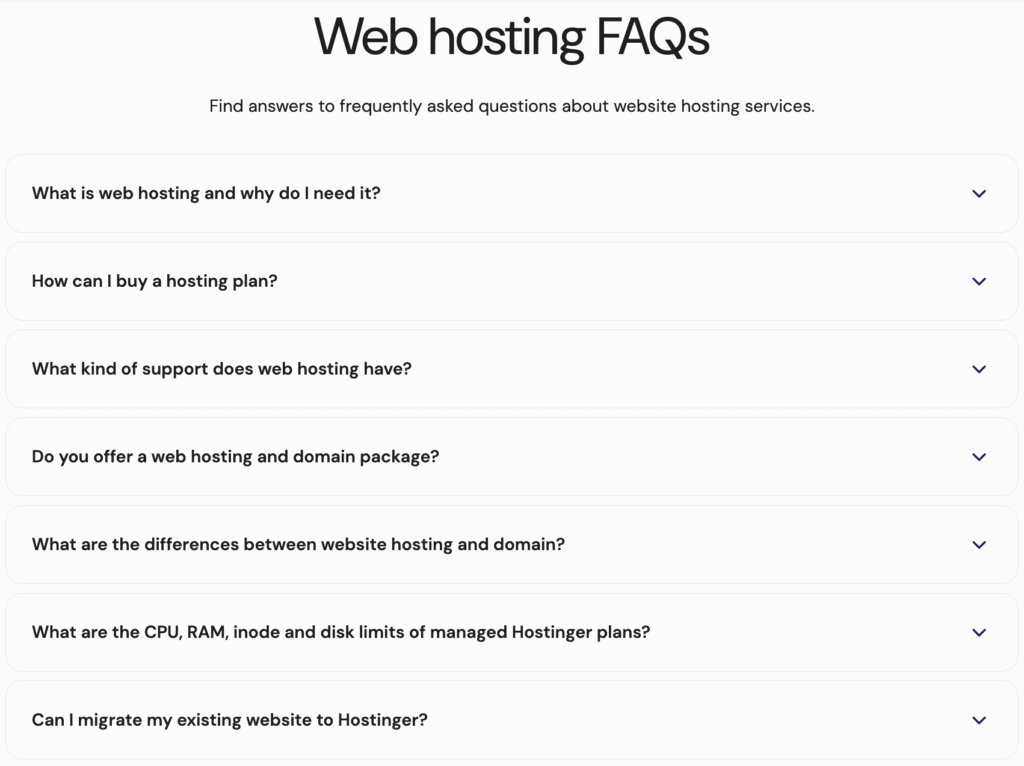
The question-and-answer format is the most citable element on the page, and the FAQ section is your final opportunity to give AI the direct answers it needs to cite and rely upon.
But don’t just guess which questions to answer. Here are the most practical places to find the exact questions your customers are asking:
- Internal data. Check your customer support emails, sales call notes, and most importantly, your on-site search data (what are users typing into your website’s search bar?).
- External search. Check the People Also Ask box on Google for your product’s name and key feature pages.
- Review sites. Scan product reviews on platforms like G2 or Capterra, or check related subreddits, to see what limitations or questions users commonly raise.
- Ask an AI directly. Use an AI platform to ask: “What are the top 5 questions a new customer would ask about [Your product]?” This provides a fast list of common concerns.

Tactic 5: Remove all friction for AI crawlers
As we engineered our content, we realized that we could have the best articles in the world, but if AI crawlers couldn’t read it, it was invisible.
The fix came down to ensuring AI could both understand and access our content. Our team focused on two major technical cleanups:
First, we perfected our Schema Markup. This is the foundational “AI language” that crawlers rely on to understand the meaning and context of your data.
Here’s how to implement this:
- Author schema. To prove your authors’ authority to AI, implement Person schema. It’s code that explicitly tells AI who the author is and links to their other profiles, solidifying their expertise.
- FAQ schema. When you add an FAQ section, wrap it in FAQPage schema. This code tells AI “This is a list of questions and answers,” making them eligible to appear directly in search results and AI answers.
- Schema generators. You don’t need to write code. Use free tools like Merkle’s Schema Markup Generator or Writesonic’s Schema Generator.
- Placement. Embed the Schema code (usually in JSON-LD format) directly into the <head> or <body> section of the specific page it describes.
- Schema validator. Always check your work. Paste your URL into Google’s Rich Results Test or the Schema.org Validator to see if it works as expected.
Then, we fixed broken links and added an llms.txt file. This is a simple text file in your site’s directory that gives AI platforms explicit permission to crawl your content.
- Fix broken links. Clean up any 404 errors or broken internal links, as these signal low quality and interrupt crawler flow. To find these errors, check Google Search Console, or use tools like Screaming Frog or Ahrefs to crawl your entire site. Once found, either update the source link or implement a 301 redirect to the correct, live page.
- Create an llms.txt file. This text file is the most straightforward way to grant explicit permission to AI platforms to crawl and use your content. Unlike the standard robots.txt file, which tells search engines which pages to index and rank, llms.txt communicates your data usage permissions specifically to Large Language Models. Use llms.txt generators from WordLift or Keploy to create your file. Then upload the llms.txt file to the website’s root directory (accessible at yourdomain.com/llms.txt), alongside your robots.txt file.
Tactic 6: Future-proofing your site for AI agents
We made great progress optimizing our content and pages for AI search and continue to make iterations, but we’ve always got one eye on what’s next. And what’s next are AI agents, which will browse the web and complete tasks for users on their behalf.
These agents are programmed for task completion, meaning they actively browse, click, and evaluate site quality just as a person does. Their goal is to complete the user’s task in the shortest amount of time, and any technical hurdle is seen as an inefficient path.
So, if your site is slow, unstructured, or confusing, an AI agent will “bounce” just like a human user. It will give up and go to a competitor’s site that is faster and easier to parse.
This is where technical performance becomes non-negotiable. We use Google’s PageSpeed Insights (it’s free) to test our pages. It gives a clear list of technical issues, from image sizes to server response times. Fixing these issues makes your site better for humans and usable for AI agents.
But optimizing for speed is a never-ending task unless you address the root cause of slow loading. This is where your foundation matters, and that foundation is your hosting service.
By choosing a hosting service engineered with clean, structured code and high-performance hardware, you get a technical foundation that is ready for the future by default.

AI SEO is a new mindset
Content engineering isn’t a one-time fix – it’s a new way of thinking. It requires creating an ecosystem of content that is built for both humans and machines, ensuring your brand’s authority is tangible and provable to AI crawlers.
This is how you future-proof your content. You’re moving beyond simply writing for search engines to building a structured library of answers that makes you the definitive source for both today’s AI search and tomorrow’s AI agents.
Start today by applying the framework to your existing content. Look at your most popular articles and ask:
- Can you rewrite the intro to be “answer-first”?
- Can you change the subheadings into direct questions?
- Where can you add a simple HTML table to make your data more citable?
- Are your author bios just names, or do they prove why they’re experts?
By doing this, you’re taking direct control over the narrative and ensuring that when an AI system or agent looks for an answer, your site is the easiest and most authoritative place to find it.
All of the tutorial content on this website is subject to Hostinger's rigorous editorial standards and values.

Simon is a dynamic Content Writer who loves helping people transform their creative ideas into thriving businesses. With extensive marketing experience, he constantly strives to connect the right message with the right audience. In his spare time, Simon enjoys long runs, nurturing his chilli plants, and hiking through forests. Follow him on LinkedIn.

Deyimar Albornoz, Organic Marketing Strategist at Hostinger, has 10 years of experience in the SEO field. She specializes in developing and scaling organic growth strategies that integrate strategic planning, cross-team collaboration, and data-driven execution. Throughout her career, Deyimar has focused on improving visibility, traffic, and customer acquisition through high-impact, non-paid channels.