Side hustles from home: 25 flexible ways to make money in 2026
May 21, 2026
/
Alma
/
12 min Read

Side hustles from home are flexible ways to earn extra income using your skills, services, or digital tools – all without fixed hours or leaving your house.
You can start with freelance work or online services, build income streams through content and ecommerce, or sell creative products from home. There are also simple online jobs that you can pick up quickly if you want something with minimal setup and fast payouts, such as surveys, user testing, and paid focus groups.
1. Start an online store
Starting an online store allows you to sell products you create or source from suppliers – and it’s one of the most scalable ways to make money online without ever needing a physical location. The most popular models are direct sales, reselling, and dropshipping, and a mature ecommerce store earns $20,000–$110,000 in monthly revenue.
To launch your online store, find your niche, decide on products you want to sell, and choose the ecommerce platform that suits your needs. Hostinger Ecommerce Website Builder offers easy setup, customizable templates, and no transaction fees, so you keep all your profits.
Build your online store and start selling
2. Become an influencer
As an influencer, you earn money through brand deals, sponsored posts, and affiliate marketing. Earnings range from a few hundred dollars to several thousand dollars per post, depending on your niche and audience size.
On TikTok, larger creators often earn $5,000–$20,000 per campaign, while YouTube channels with big audiences commonly earn $50,000–$200,000 per year across ads and brand deals.
Choose a niche and define your target audience. You could be an influencer for personal finance, food, or a fitness influencer – these niches consistently perform well. Once you’ve built your reach, focus on digital monetization strategies – online coaching, branded digital products, and affiliate partnerships are all things you can manage entirely from home.
3. Offer digital marketing services
Digital marketing is a strong, at-home side hustle opportunity, with the industry set to hit $1.3 trillion by 2033. Popular options include social media management, content writing, SEO consulting, and graphic design services. On average, freelance digital marketers earn $25/hour.
Choose a focus area, develop your skills, and build a portfolio. Then market yourself through networking and platforms like Upwork or Fiverr. If creative side hustles like graphic design or content creation are where your strengths lie, those make for a strong, low-ramp-up entry point into digital marketing work.
4. Do voice-over work
If you’ve ever been told you have a great voice, there’s a real market for it – and you don’t need a professional studio to access it. Voice-over artists record narration and dialogue for commercials, documentaries, e-learning courses, and audiobooks – many of them from home setups.
Entry‑level voice‑over work pays around $20–$50/hour, while experienced professionals can charge $100–$300/hour or more for specialized projects.
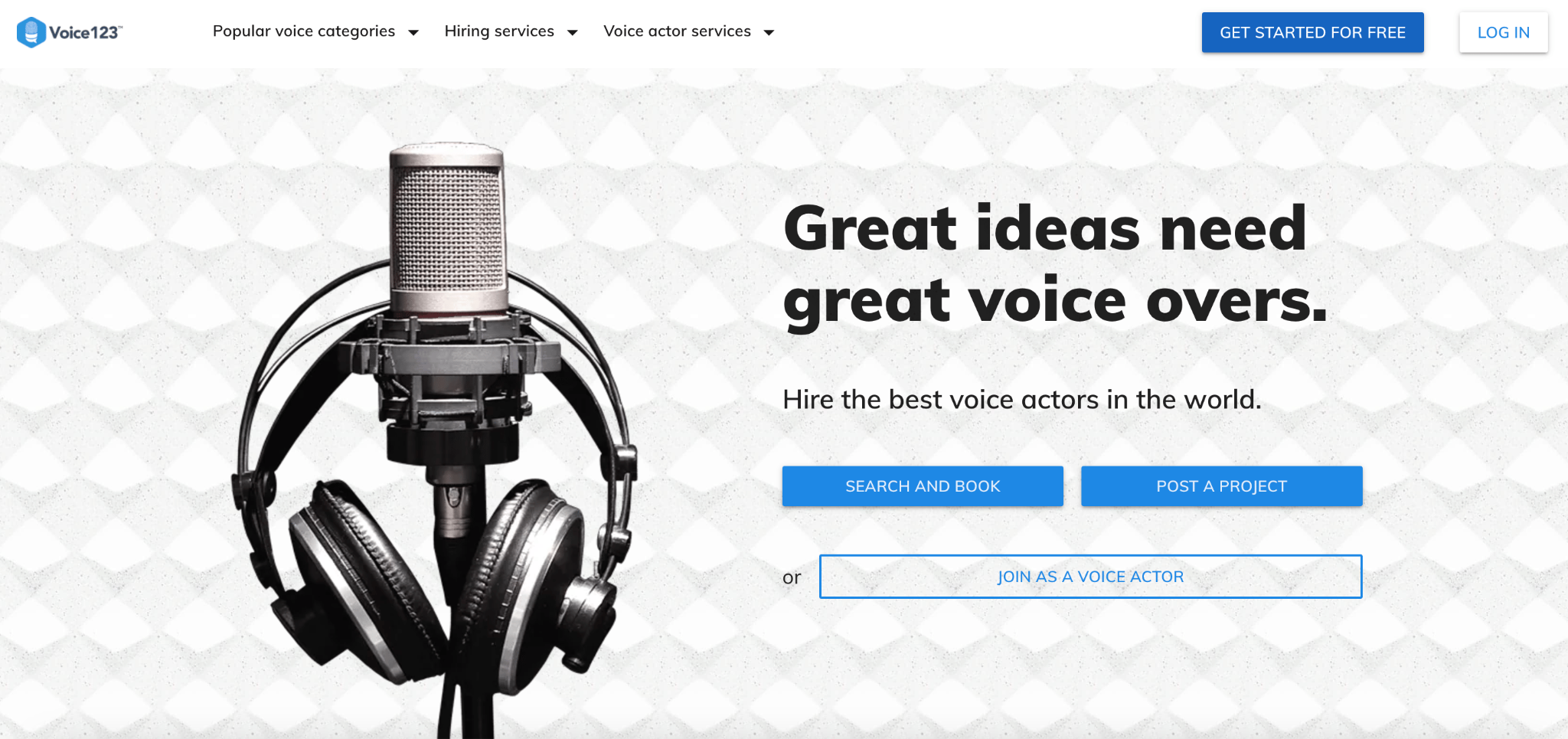
Purchase a microphone, headphones, and recording software such as Audacity, and consider soundproofing your recording space for better sound quality. Then look for your first gigs on platforms like Voices.com or Voice123.
5. Launch a YouTube channel
YouTube rewards consistency more than raw talent – channels that publish regularly and stay in a specific niche almost always outperform those with better production but no clear direction.
Build an audience around a topic you know well, grow it, and earn through ads, sponsorships, affiliate marketing, or merchandise. Creators who hit one million subscribers can earn roughly $60,000–$300,000 a year, and even mid-sized channels can generate a reliable supplemental income once their content library grows.
You can run the whole operation from home. You don’t even need a studio – filming, editing, publishing, and audience engagement all happen at your desk. Invest in solid equipment (a decent camera, microphone, and editing software), pick your niche, and show up on a schedule you can actually keep.
6. Start a print-on-demand business
Print-on-demand flips the usual product business model: you create a design, a third party prints and ships, and you never have to touch inventory. It’s ideal for creative individuals, artists, or anyone looking to monetize their designs without a significant upfront investment or leaving their house.
Platforms like Redbubble and Printful take care of everything from printing to shipping, and print-on-demand businesses often earn a few hundred to a few thousand dollars per month once they find what works.
Once you’ve picked your platform, focus on high-quality designs that appeal to your target audience and promote them on social media or through an online store.
7. Get into blogging
Blogging takes longer to pay off than most side hustles – but once your content ranks, it earns without you doing much else. You write from home, and your posts keep generating income through ads, affiliate links, and digital products while you sleep.
Successful bloggers often earn around $1,000–$10,000/month, with a small top tier reaching $20,000+/month once they’ve built serious traffic.
Pick a niche you’re genuinely interested in and choose a blogging platform to get started. Aim for 10,000 monthly page views as your first milestone – that’s where monetization opens up. Write blog content that’s genuinely useful, and optimize it for search from day one.
8. Become an affiliate marketer
Affiliate marketing lets you earn from home by recommending products you already use or trust. You share a tracked link in your content, and when someone buys, you earn a commission. No inventory, no shipping, no meetings.
Programs like Instagram’s affiliate feature make it easy to share links with your audience. Earnings range from $100 to $1,000/month, depending on your niche and reach, with no hard ceiling for established marketers.
Pick a niche you can talk about consistently, create your website, blog, or social page, and join an affiliate network. Then, create high-quality, useful content that provides value to your audience and promote your links on social media.
9. Sell courses online
Selling courses online is an excellent opportunity for educators, professionals, and experts who want to share their knowledge and expertise with a global audience through platforms like Udemy and Teachable or their own website.
You earn between $1,000 and $10,000/month, depending on the course’s subject and popularity. Unlike freelancing, the work is front-loaded – you just build the course once, then sell it indefinitely.
Figure out the specific outcome your course helps students achieve, build the content from home, and promote through social media, email marketing, or collaborations with other creators in your niche.
10. Start a podcast
Podcasting is a great way to turn your storytelling skills into income – and your recording studio is just a quiet corner of your home.
As your audience grows, monetize through sponsorships, premium content, ads, or merchandise. At around 10,000 downloads per episode, podcasters can earn roughly $500–$900 per episode from ads and sponsorships.
To start a podcast, find a niche you’re passionate about, invest in a decent microphone and recording software like Adobe Audition or GarageBand, and publish on platforms like Spotify or Apple Podcasts.
11. Sell unused items
Before you invest in anything new, look around your home for things you can resell. You’re probably sitting on sellable inventory right now. Clothes, electronics, furniture, and vintage finds all have ready buyers online. Pricing at 50–75% of the original value tends to move items quickly without leaving money on the table.
Sort and photograph your items, then list them on Facebook Marketplace, Carousell, eBay, or Etsy for vintage pieces.
12. Take surveys online
Surveys won’t replace your salary – but they’re genuinely zero-barrier: no skills, no setup, no need to even leave the comfort of your couch. Each one pays $0.50–$5 on average, and staying consistent gets you to $50–$150/month.
Sign up for Swagbucks, Survey Junkie, or Pinecone Research. Keep in mind that some platforms require you to be over a certain age or have specific demographics, so read the guidelines carefully before signing up.
13. Sell digital products
Create it once, sell it indefinitely – that’s the appeal of selling digital products. Ebooks, templates, printables, presets, and planners all have high profit margins and near-zero ongoing costs once the product is built.
Successful digital product sellers earn a few hundred to a few thousand dollars per month, depending on their niche, pricing, and traffic. Create your digital products in Canva or a similar tool, then sell through Etsy or your own ecommerce store for better margin control.
14. Do user testing
User testing is a straightforward way to earn money by providing feedback on websites, apps, and products – from your home computer, on your own schedule. Sessions last between 5 and 60 minutes and pay $3–$30 each. It’s not a full-time income, but it’s easy money with no skill requirements beyond the ability to share clear feedback.
Sign up on platforms like UserTesting, TryMyUI, or Testbirds, complete a sample test to qualify, and start accepting paid opportunities.
15. Join paid focus groups
Market research companies need real opinions to improve their products and services. That’s why they pay everyday consumers to participate in focus groups, giving you the opportunity to share your feedback and earn money from home.
Participants earn about $50–$200 per session, with some specialized or longer studies paying $300+ when the topic or background is more niche.
Register on websites like Respondent or FocusGroup.com. Look for focus groups that match your interests or demographic to secure invites, and filter for online sessions so you can participate remotely.
16. Become a virtual assistant
Becoming a virtual assistant (VA) is a low-cost side hustle that allows you to handle administrative tasks for businesses remotely. Many companies outsource responsibilities such as email management, scheduling, data entry, and research instead of hiring full-time staff, which creates steady demand for remote support.
VAs work entirely online and need only a laptop and a reliable internet connection to get started. They earn between $11 and $33 per hour, while experienced freelancers make up to $5,000 per month.
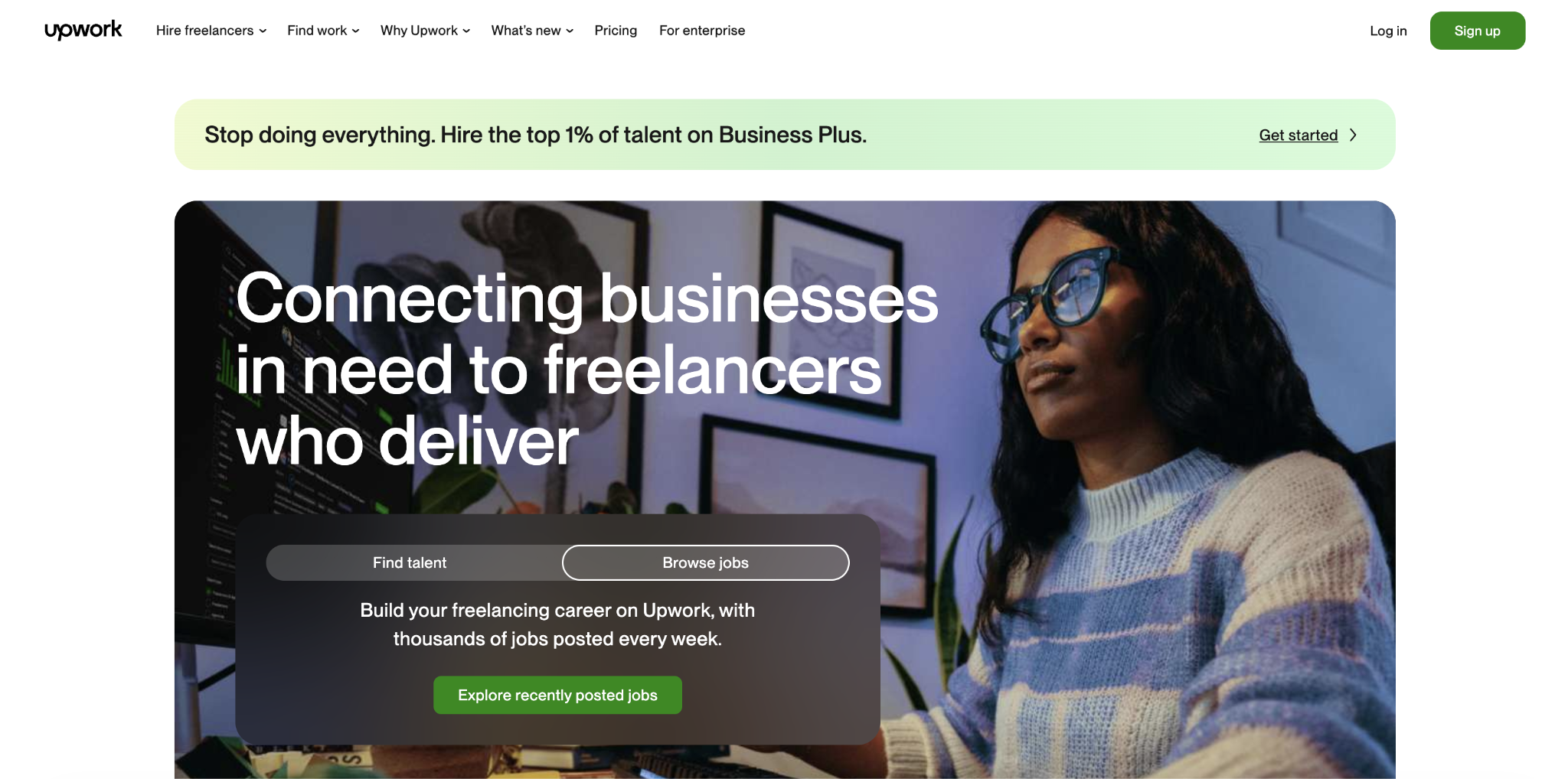
To start working as a VA, create a professional profile on freelance platforms such as Upwork or Fiverr. Highlight your organizational, communication, and time-management skills, then apply for part-time or project-based opportunities to build experience and increase your hourly rate.
17. Become a transcriber or translator
Transcription and translation convert language skills into flexible remote income. Transcription involves turning audio or video recordings into written text, while translation involves converting written content from one language into another. Both roles require strong typing speed or bilingual proficiency and can be done entirely online.
Because businesses constantly need documentation and multilingual communication, transcribers earn $9–$30 per hour, while translators earn $15–$44 per hour, with higher rates for specialized fields like legal or medical content.
Most beginners enter through platforms such as Rev or GoTranscript for transcription and ProZ for translation. After passing a short skills test, you can start accepting projects and increase your rates as you gain experience and client reviews.
18. Online tutoring
Online tutoring connects your subject expertise with students who need remote academic support. You teach from home via video sessions, helping learners improve in subjects such as math, science, languages, or exam preparation.
Tutors earn $12–$22 per hour, with higher rates for advanced subjects or standardized test prep. All you need to operate your online tutoring from home is a quiet workspace, a stable internet connection, and a webcam.
Platforms such as Chegg, TutorMe, and VIPKid handle student matching and scheduling, so you can focus on teaching and gradually increase your rates as you gain reviews.
19. Sell stock photography
Stock photography turns strong images into recurring digital income. Businesses, blogs, and marketing teams license visuals every day, and you earn each time someone downloads one of your photos.
Over time, a strong stock photo can earn anywhere from a few dollars to a few hundred dollars in total royalties. Commercial, niche-focused photos outperform generic lifestyle shots. Build a technically sharp portfolio and upload to Shutterstock, Adobe Stock, or iStock – the larger and more useful your library becomes, the more consistent your passive income grows.
20. Sell crochet items
Crochet generates a steady side income when you position it as a product, not just a hobby. The craft space in your home becomes your production floor, and your online shop becomes your storefront for your crochet business.
Handmade goods have a loyal online buyer base, and crochet sits in a sweet spot: low material costs, high perceived value, and strong repeat demand. Sellers earn up to $1,000/month depending on what they make and how actively they market.
Start with a small collection of distinctive, high-quality pieces, then open a shop on Etsy or your own site. Use visual-focused social media platforms like Instagram to help new people discover your work. Social media brings in first-time buyers, while consistent quality and a recognizable style turn those first purchases into repeat customers.
21. Sell paintings
Selling your art no longer requires a gallery or an agent. All you need is a cohesive portfolio, high-quality photos of your work, and an online storefront. Digital marketplaces connect independent artists with buyers worldwide while you work entirely from your home studio.
Working painters in the US report an average income of around $40,000 per year. Platforms like Etsy, Society6, Redbubble, or your own website provide global exposure, while local art shows can serve as a secondary sales channel once your online presence is established.
22. Make candles
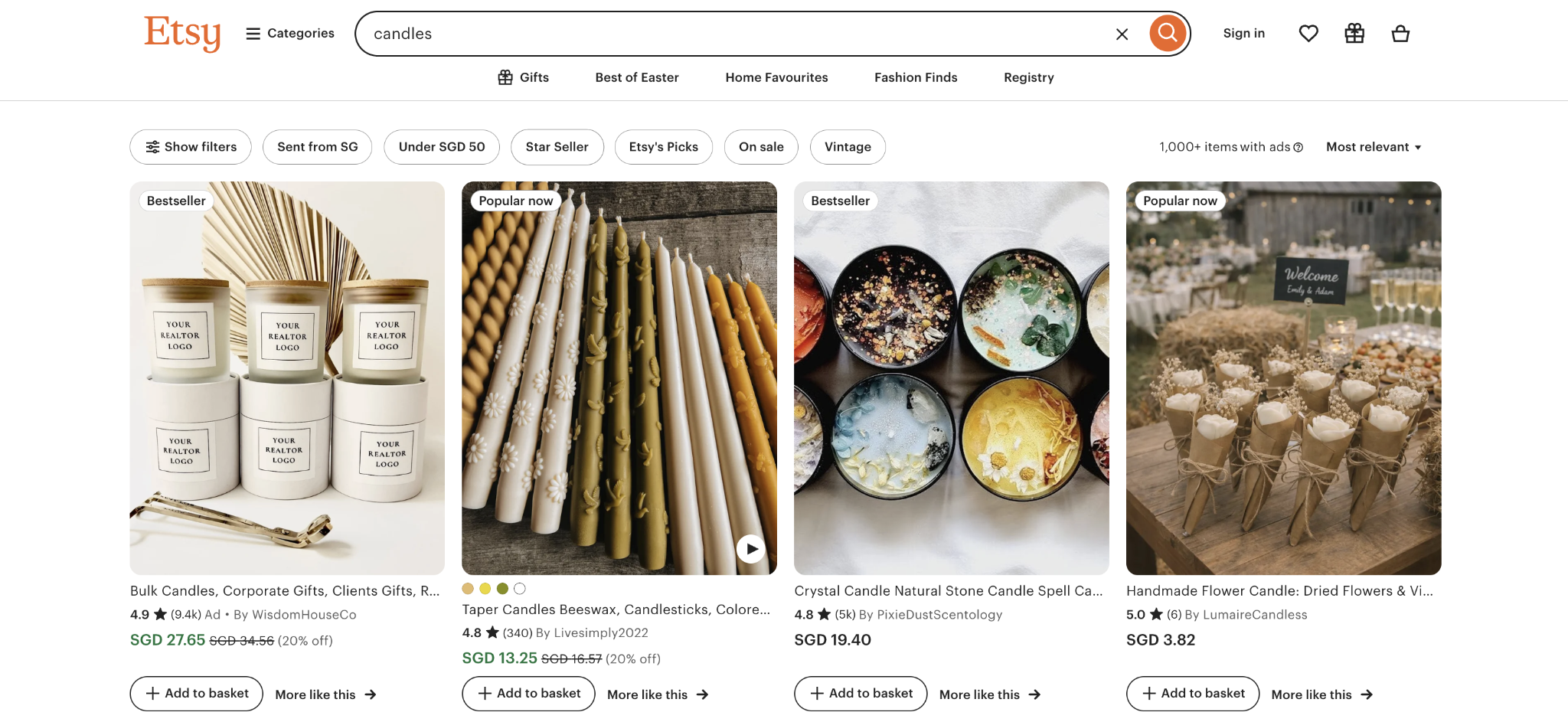
Candle-making is one of the more underestimated home businesses out there. One example, Francisco Rivera, built his candle brand to $462,000 per year – proving the demand is real when branding and positioning are done well.
Startup costs for candle businesses remain relatively low, making it financially manageable to test different scents, packaging styles, and brand aesthetics. Develop a signature scent or visual identity first, produce a focused initial batch at home, and launch through Etsy or your own online store to validate demand.
Once online sales are consistent, add local markets as a secondary channel to increase visibility without shifting away from your primary digital volume.
23. Sell handmade crafts
Selling handmade crafts turns creative skills into a structured home-based business. You produce items such as jewelry, ceramics, textiles, or woodwork from home and sell directly to online buyers.
Buyers actively seek out handmade goods – and they’re willing to pay craft businesses a premium that mass-produced items can’t command. Established handmade craft businesses commonly earn in the mid‑four to low‑five figures per year, with a smaller number scaling into the $20,000–$60,000+ range as they grow.
A small production space, quality materials, and a clear brand identity are enough to begin. Choose one profitable craft that matches your skills, sell through Etsy or your own store, and promote on Pinterest and Instagram, where visual products perform best. Local markets help with exposure, but long-term volume comes from steady online sales and repeat customers.
24. Try bookkeeping from home
Bookkeeping provides a steady remote income because every small business needs accurate financial records. Most companies cannot justify hiring a full-time accountant, creating ongoing demand for freelance bookkeepers to track income, expenses, and transactions.
Bookkeepers earn $20–$40 per hour, while experienced freelancers charge $60+ per hour. You don’t need a CPA license to start. Solid accounting fundamentals and tools like QuickBooks or Wave handle most of what small business clients need. Find your first clients through Belay or BookKeeper.com, or reach out directly to small businesses via LinkedIn.
25. Offer proofreading or editing services
Most writers are too close to their own work to see the small mistakes or weak spots. That’s where proofreading and editing come in – you step in as the second set of eyes that makes everything clearer and more polished.
Proofreading focuses on fixing grammar, spelling, and punctuation. Editing goes deeper by improving structure, flow, and overall readability. Proofreaders earn $15–$50 per hour, while editors charge $30–$80 per hour for more involved revisions.
Strong language skills and attention to detail are what matter most here, and projects are delivered digitally, so you handle everything from your laptop. Platforms like Reedsy, Upwork, and Fiverr help you land your first clients, and once you build reviews, better-paying work becomes much easier to secure.
What are the steps to launch your first side hustle from home?
Starting a side hustle from home isn’t complicated, but it does require a clear plan. You need to know what you’re offering, who it’s for, what it will cost, and how people will find you.
Once you’ve settled on a side hustle idea, these steps are what actually get it off the ground.
1. Identify your skills and strengths
Your existing skills are your fastest path to income.
Instead of chasing something completely new, start with what you already do well. Writing, organizing, designing, teaching, analyzing – these are marketable skills. The closer your side hustle matches your strengths, the faster you can begin earning from home without extra training or trial-and-error.
2. Validate demand and set a clear income goal
Market demand determines whether your idea can actually pay.
Look at what competitors offer, what they charge, and whether customers are actively searching for similar services or products. Then set a specific monthly target – for example, earning $500 per month tells you exactly how many sales or clients you need to reach that number.
3. Calculate your startup costs
Startup costs decide how quickly you can launch.
List everything you’ll need to operate from home – software, materials, subscriptions, or equipment. Most digital hustles require little more than a laptop and an internet connection, while product-based businesses may need to invest in upfront inventory. Knowing your numbers early prevents cash shortages or stalled launches later.
4. Set pricing that supports growth
Pricing affects both sustainability and confidence.
Research what others in your niche charge, then set rates that cover your costs and reflect your value. It’s fine to start slightly lower while building proof, but plan to raise your prices as your results and experience grow. Underpricing long-term leads to burnout.
5. Clarify legal and tax requirements
Legal awareness protects your income.
Side hustle earnings are taxable in most regions. Depending on where you live, you may need to register your business, collect sales tax, or report quarterly income. Keep records of every expense from day one. Sorting this out early prevents penalties, back taxes, or unexpected fines later.
6. Build a simple home setup
Your environment affects your output.
Create a setup that allows you to work without interruptions or technical delays. That might mean a quiet corner with a microphone for voice-over work, design software for digital products, or bookkeeping tools like QuickBooks. Start lean – upgrade your equipment only when revenue justifies it.
7. Schedule consistent work time
Consistency builds momentum.
Side hustles don’t grow on “whenever I have time.” Block specific hours each week and protect them. Even 8–10 focused hours can generate meaningful progress when you show up consistently and avoid distractions during that time.
8. Create an online presence
Visibility creates opportunity.
Clients and customers can’t hire you if they can’t find you. Set up professional profiles on relevant platforms like Upwork, Etsy, Fiverr, or LinkedIn. A simple website adds credibility and gives you a central home base you control. Focus your effort where your audience already spends time.
How to turn your side hustle into a full-time business
The difference between a side hustle and a full-time business comes down to one thing: structure. A side hustle runs on your availability – you take on work, you get paid, you repeat. A business runs on systems, so income doesn’t stop the moment you do.
Consistent income is a good sign, but it only proves the idea works. What makes it full-time is everything you build around it. A defined offer instead of “I’ll do whatever comes in.” Rates that reflect your actual value. A simple onboarding process. At least one reliable way to get clients that doesn’t rely on hoping someone refers you.
Practically, that means changing how you operate. Start by separating your business finances from your personal ones – a dedicated account makes tax filing easier and forces you to treat revenue seriously.
You should also set a pricing floor and raise it when demand supports it; undercharging is how side hustles stay side hustles. And figure out acquisition. Whether that’s SEO, a newsletter, or consistently showing up on one platform, you need a channel that brings clients to you instead of you constantly chasing them.
Once those pieces are in place, you’re not doing a side hustle anymore – you’re starting an online business, and the question shifts from “how do I make money this month?” to “how do I build something that keeps growing?”
All of the tutorial content on this website is subject to Hostinger's rigorous editorial standards and values.

Alma is an AI Content Editor with 9+ years of experience helping ideas take shape across SEO, marketing, and content. She loves working with words, structure, and strategy to make content both useful and enjoyable to read. Off the clock, she can be found gaming, drawing, or diving into her latest D&D adventure.


