Best web hosting: Top providers for 2026
Jun 18, 2026
/
Justina B. & Ariffud M.
/
10 min Read

The best web hosting provider depends on your use case, including your site type, traffic, and budget. Hostinger balances all three with fast servers and plans starting from CA$ 4.19/month.
For specific needs, Bluehost suits a first WordPress site, Scala Hosting fits online stores, and GreenGeeks leads on eco-friendly hosting. SiteGround is strong for managed WordPress, IONOS for the lowest first-year price, and Hosting.com for fast hardware on high-traffic sites.
The starting price is only part of the picture, since storage limits, included domains, backups, and migration support vary widely from host to host.
| Provider | Starting price | Lowest-tier storage | Websites | Bandwidth | Free domain | Free backups | Free migration | Free SSL |
| Hostinger | CA$ 4.19/month | 20 GB SSD | 3 | Unlimited | ✅ | Weekly | ✅ | ✅ |
| Bluehost | $3.99/month | 10 GB NVMe | 10 | Unmetered | ✅ | Weekly | ✅ | ✅ |
| Scala Hosting | $2.95/month | 10 GB NVMe | 1 | Unmetered | Higher plans | Higher plans | ✅ | ✅ |
| GreenGeeks | $2.95/month | 25 GB | 1 | Unmetered | ✅ | Daily | ✅ | ✅ |
| DreamHost | $2.89/month | 25 GB NVMe | 25 | Unmetered | ✅ | Daily | ✅ | ✅ |
| SiteGround | $2.99/month | 10 GB | 1 | Unmetered | ✅ | Daily | ✅ | ✅ |
| InMotion Hosting | $4.99/month | 100 GB NVMe | 2 | Unmetered | ✅ | Daily | ✅ | ✅ |
| HostGator | $3.75/month | 10 GB SSD | 10 | Unmetered | ✅ | Provided as a courtesy | ✅ | ✅ |
| IONOS | $1/month | Unlimited | Unlimited | Unmetered | ✅ | Daily | ❌ | ✅ |
| Hosting.com | $2.99/month | 15 GB | 1 | Unlimited | ✅ | Daily | ✅ | ✅ |
| Namecheap | $2.28/month | 20 GB SSD | 3 | Unmetered | ✅ | Twice a week | ✅ | ✅ |
| GoDaddy | $5.99/month | 25 GB NVMe | 1 | Unmetered | ✅ | Daily | ✅ | ✅ (first year only) |
1. Hostinger

Best for: overall value and performance for any website.
Hostinger is a hosting provider that offers web, cloud, VPS, and WordPress hosting, containing its own website builder and AI tools. Its plans run on fast LiteSpeed Enterprise servers with SSD storage.
Hostinger’s web hosting plans start with the entry-level Premium plan, which includes 3 websites, 20 GB of SSD storage, and unlimited bandwidth. You also get a free domain and free migrations. Every site comes with free unlimited SSL certificates, too.
On the downside, support is chat-only, and there are no dedicated server plans, so the largest, highest-traffic sites eventually move up to cloud or VPS hosting.
Key features:
- AI-powered tools. The AI Website Builder, AI Troubleshooter, and Kodee AI assistant help you create and manage your site faster.
- Fast servers. LiteSpeed Enterprise servers and built-in caching keep pages loading quickly, even for busy sites.
- Complete security. You get automatic malware scanning, a web application firewall, and DDoS protection at no extra cost.
- Managed WordPress. All plans include automatic updates, vulnerability scanning, and a speed-boosting tool, and WordPress.org officially recommends Hostinger.
- 24/7 support. The Customer Success team is available around the clock.

2. Bluehost
Best for: beginners launching their first WordPress site.
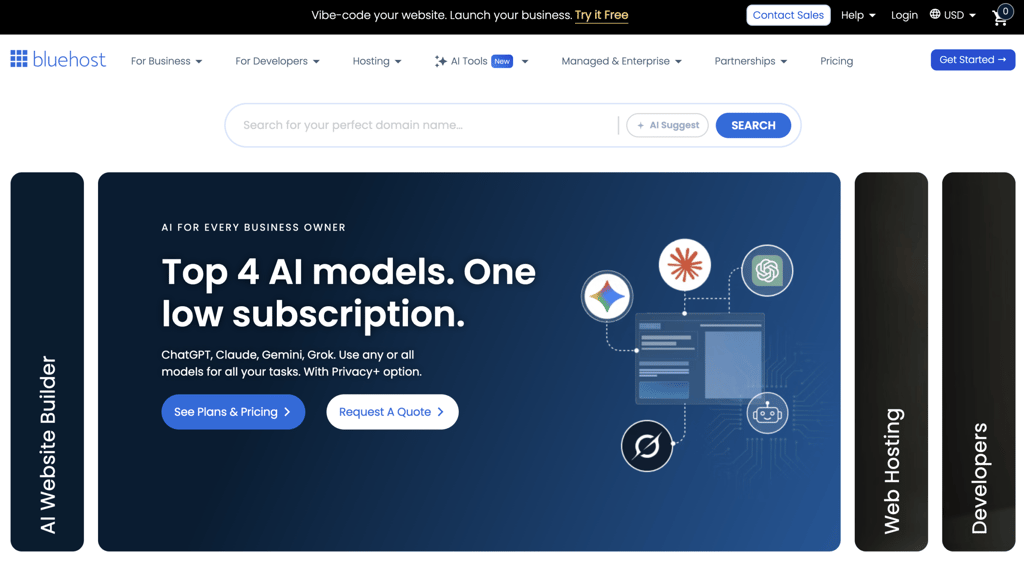
Bluehost is a beginner-friendly host that’s officially recommended by WordPress.org, which makes it a popular choice for a first WordPress site. Its plans cover the essentials to get a simple site online, including a free domain for the first year and a free SSL certificate.
The main thing to watch is the limited storage on the cheapest plan. The Starter plan comes with 10 GB of NVMe storage, which can feel tight as a site grows.
Bluehost also charges for hands-off help with migrations. You can move a WordPress site yourself with its free plugin, but the expert migration service costs $149.99 per site.
Key features:
- AI site-building tools. Bluehost’s AI website builder helps you build a WordPress site without code, guiding you from setup through design.
- Free Cloudflare CDN. Every plan includes a content delivery network to speed up your site for visitors anywhere.
- Custom WordPress themes. You get access to a library of themes to style your site.
- Staging environment. You can test changes on a copy of your site before pushing them live.
- 24/7 support. You can reach the team via live chat or email, and they’re trained to answer common WordPress questions.
3. Scala Hosting
Best for: online stores and professionals who want room to scale.
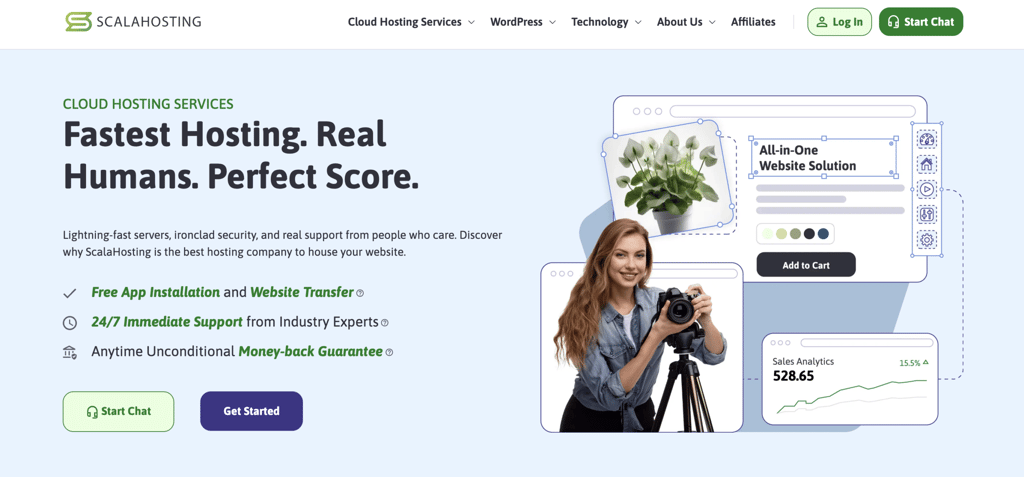
Scala Hosting is a cloud-focused host for online stores and growing businesses that have outgrown basic shared hosting. It’s been independently owned since 2007, and it builds its plans around its own control panel and security tools.
Shared plans start with the $2.95/month Mini plan, which covers one site and 10 GB of NVMe SSD storage. For stores or busy sites, the $14.95/month Entry Cloud plan adds dedicated processing power and memory for faster checkout.
Like most hosts, Scala Hosting’s introductory prices rise at renewal, so it’s worth checking the renewal rate before you commit.
Key features:
- SPanel control panel. Scala’s in-house panel works like cPanel but without a license fee, meaning you can manage sites, email, and databases from one place.
- SShield security. This AI-based system watches your site in real time and blocks 99.98% of online attacks before they reach you.
- Fast hardware. All plans come with NVMe storage for quick page loads. LiteSpeed web servers are available on the Entry Cloud plan specifically, where they speed things up.
- Free migration and email. Scala moves your site for free and includes unlimited email accounts and databases.
- Anytime Unconditional Money-back guarantee. Any prepaid or unused hosting services will be refunded fully.
4. GreenGeeks

Best for: people who want eco-friendly, green hosting.
GreenGeeks is a web hosting provider that runs on renewable energy, putting back three times as much green power as it uses. An EPA Green Power Partner since 2009, it runs fast LiteSpeed servers, so you don’t sacrifice speed for going green.
The entry-level Lite plan covers one website with 25 GB of storage, unmetered traffic, and a free domain for the first year. If you need to host more than one site, the Pro plan at $4.95/month lifts that limit.
GreenGeeks renews at a higher rate than the introductory price, which is common across the industry. The Lite plan, for example, renews at $13.95/month, while the introductory price is $2.95/month.
Key features:
- 300% green energy match. For the power its platform uses, GreenGeeks puts three times as much renewable energy back into the grid.
- Fast LiteSpeed servers. Built-in LiteSpeed caching helps pages load quickly for your visitors.
- Free CDN and SSL. Every plan includes a content delivery network and a free SSL certificate.
- Free daily backups and migration. Your site is backed up each day, and GreenGeeks will move an existing site for you at no cost.
- cPanel and 1-click installs. You manage everything from the familiar cPanel and can install WordPress and 150 other apps in one click.
5. DreamHost
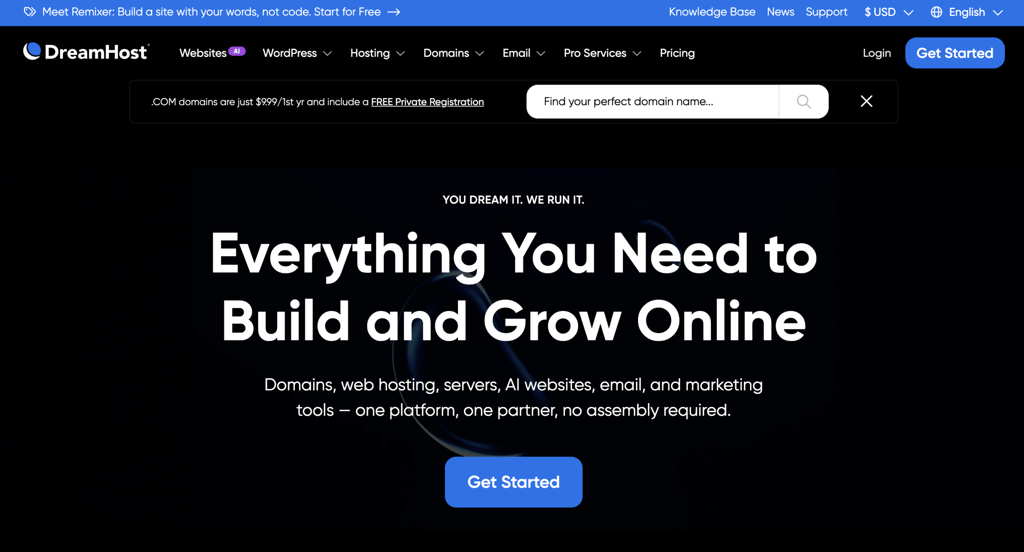
Best for: value-seekers who want reliable, no-surprises hosting.
DreamHost is a value-focused host known for transparent pricing and a 100% uptime guarantee, making it a reliable pick for blogs and small company sites. It uses its own control panel instead of cPanel and has recently shifted toward AI-assisted site building.
The Launch plan starts at $2.89/month and covers up to 25 websites, with 25 GB of NVMe storage, daily backups, and a free domain on annual plans. Each plan, from Launch to Scale, has a monthly visitor limit, so match yours to your expected traffic.
One thing to note is that the Launch plan includes email for only three months, after which it becomes a paid add-on. Phone support is also a paid callback service rather than a standard feature.
Key features:
- AI website builder. Remixer, DreamHost’s conversational AI builder, turns a plain-language description into your pages, copy, and images. It’s a 30-day free trial, then a paid plan, not a feature included with every hosting plan.
- AI business tools. Built-in tools help you draft a business plan, track traffic, and generate website content.
- 100% uptime guarantee. DreamHost promises continuous uptime, backed by account credits if it falls short.
- Custom control panel. DreamHost uses its own clean, easy-to-use panel instead of cPanel.
- Officially recommended by WordPress.org. DreamHost is one of the few hosts WordPress.org recommends by name.
6. SiteGround

Best for: managed WordPress sites that want top-tier support.
SiteGround is a premium managed host built on Google Cloud, and it’s a strong option for WordPress sites that need speed and expert support. WordPress.org officially recommends it, and you get extra security features, such as spam protection, at the shared hosting price.
The StartUp plan covers one website with 10 GB of storage on fast Google Cloud servers. Keep in mind that the renewal price is much higher than the intro rate, jumping to $17.99/month, so it pays to plan for the long-term cost.
The GrowBig plan adds staging, on-demand backups, and room for unlimited sites. WooCommerce also comes pre-installed with caching, so SiteGround works well for a small online store.
Key features:
- AI anti-bot security. SiteGround’s in-house system blocks over 1 million attacks per day before they reach your site.
- Free SiteGround CDN. The built-in CDN routes visitors through the nearest location for faster loading.
- In-house caching. The SuperCacher tool speeds up your site and is turned on by default.
- Free WordPress migration plugin. You can move an unlimited number of WordPress sites with the automated plugin.
- Expert 24/7 support. You can reach SiteGround’s support by chat, phone, and tickets.
7. InMotion Hosting
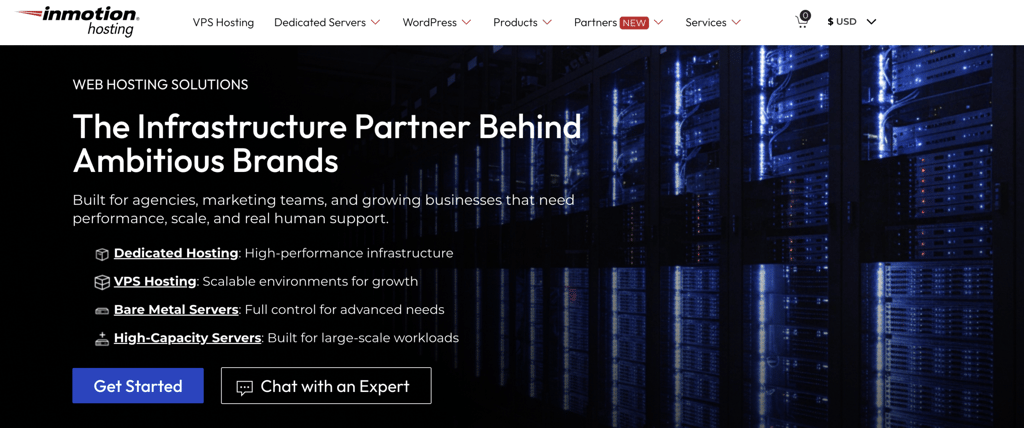
Best for: US and EU small businesses that want reliable performance.
InMotion Hosting is a reliable, performance-focused host that’s a solid fit for small businesses in the US and Europe. It backs its plans with a 90-day money-back guarantee, one of the longest trial periods in the industry.
The Launch plan includes 100 GB of NVMe storage and lets you host two websites. If you need more room, the Power plan includes 10 websites and 200GB NVMe storage.
InMotion’s data centers are only in the US and Europe, meaning loading can be slower for visitors elsewhere. A CDN helps close the gap, or you can choose a host with a data center nearer your audience.
Key features:
- UltraStack performance. A custom NGINX-based setup with caching makes sites up to 20x faster on NVMe storage.
- Developer tools included. You get Hosting Plus free with every plan. It gives you SSH access, Git, and support for Python, Node.js, and Ruby.
- Professional email and SSL. Every plan includes a professional email and a free SSL certificate for the life of your plan.
- US and EU data centers. You can host in California, Virginia, or Amsterdam to keep your site close to your audience.
- 24/7 US-based support. InMotion’s team offers knowledgeable help around the clock.
8. HostGator
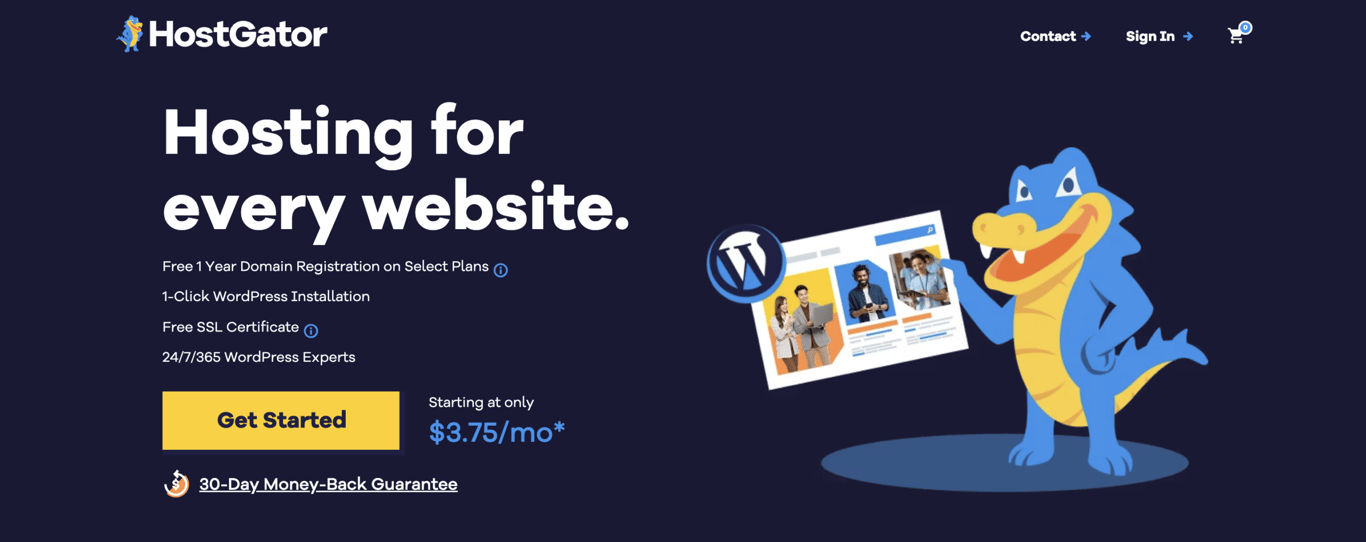
Best for: beginners who want a familiar cPanel setup.
HostGator is a long-running, beginner-friendly host that uses the familiar cPanel control panel, so it’s easy to pick up if you’ve used hosting before. Its plans cover the basics, with a free domain for the first year, a free SSL certificate, and unmetered bandwidth.
The advertised price relies on some upselling, so it pays to read what’s included. The good news is that recent plans bundle in malware protection, and free courtesy backups run in the background.
For automated backups you can restore on demand, HostGator offers the paid CodeGuard service. It’s a useful upgrade if your site changes often.
Key features:
- Free Cloudflare CDN. Every plan includes a CDN that serves your site from servers close to each visitor, so pages load faster worldwide.
- WordPress staging and developer tools. You get a staging area to test changes safely, plus SSH access and WP-CLI.
- cPanel control panel. Manage your files, databases, and email from the industry-standard interface.
- One-click installs. Setting up WordPress and other apps takes a single click.
- 30-day money-back guarantee. You can test HostGator risk-free for a month.
9. IONOS
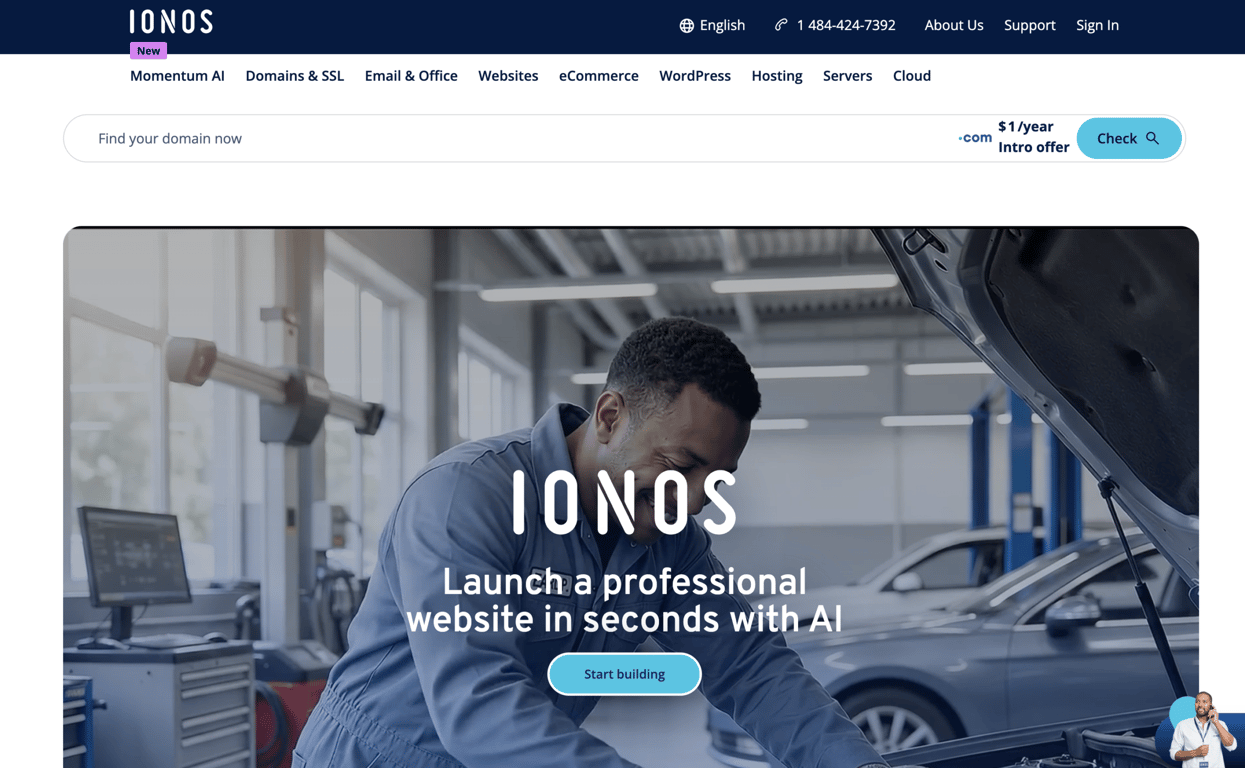
Best for: getting a site online at minimal upfront cost.
IONOS is a large web host that offers shared, VPS, and cloud hosting, as well as domains and email. It draws beginners with one of the lowest first-year prices around, and even the $1/month Plus plan includes unlimited storage and websites.
The renewal cost climbs steeply once your first term ends, so plan for it in your budget. The plan also includes just one email account with 2 GB of mailbox space.
IONOS suits beginners on a tight budget who want a guided start, since it pairs a low entry price with a personal consultant on every plan. For a high-traffic or fast-growing site, though, a more performance-focused host is usually a better fit.
Key features:
- AI website builder and assistant. IONOS includes an AI builder and assistant that generates layouts, pages, text, and images for you.
- Daily malware and vulnerability scans. IONOS checks your site daily for malware and known security issues.
- Personal consultant. Every customer gets a dedicated contact for personalized help at no extra cost.
- Geo-redundant infrastructure. Your data is mirrored across two data centers, which adds protection against data loss.
- Wildcard SSL included. The free Wildcard SSL secures your main domain and all its subdomains.
10. Hosting.com
Best for: beginners who want high-performance hardware.
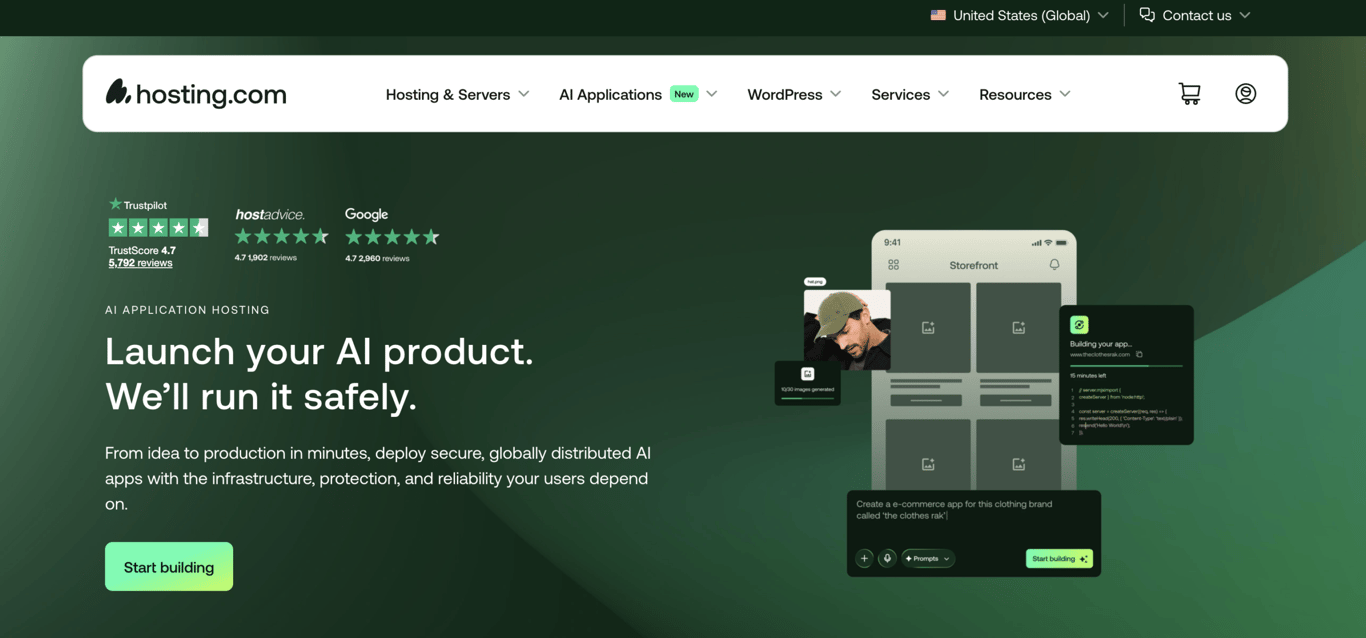
Hosting.com is a web hosting provider, formerly known as A2 Hosting, that offers shared, WordPress, VPS, and dedicated plans. It’s built for speed, with AMD EPYC processors, NVMe storage, and LiteSpeed servers, plus a strong security package.
Hosting.com runs on LiteSpeed servers and high-performance hardware like AMD EPYC processors and NVMe storage. A free in-house team also handles the whole job of moving your sites and domains.
The thing to watch is the renewal price. The Starter plan’s $2.99/month introduction rate is for a one-year term and renews at a higher rate. It’s limited to one site and 15 GB of storage.
Key features:
- LiteSpeed servers. Hosting.com uses LiteSpeed to keep your pages loading fast, even when your site gets heavy traffic.
- High-performance hardware. Plans run on AMD EPYC processors, NVMe storage, and LiteSpeed servers.
- Free in-house migrations. A 24/7 team moves your websites and domains for free.
- Free CDN and security. Every plan includes a CDN, free SSL, and protection against malware and DDoS attacks.
- cPanel control panel. You manage your files, databases, and apps from the familiar cPanel dashboard.
11. Namecheap
Best for: hosting a few small websites on a tight budget.
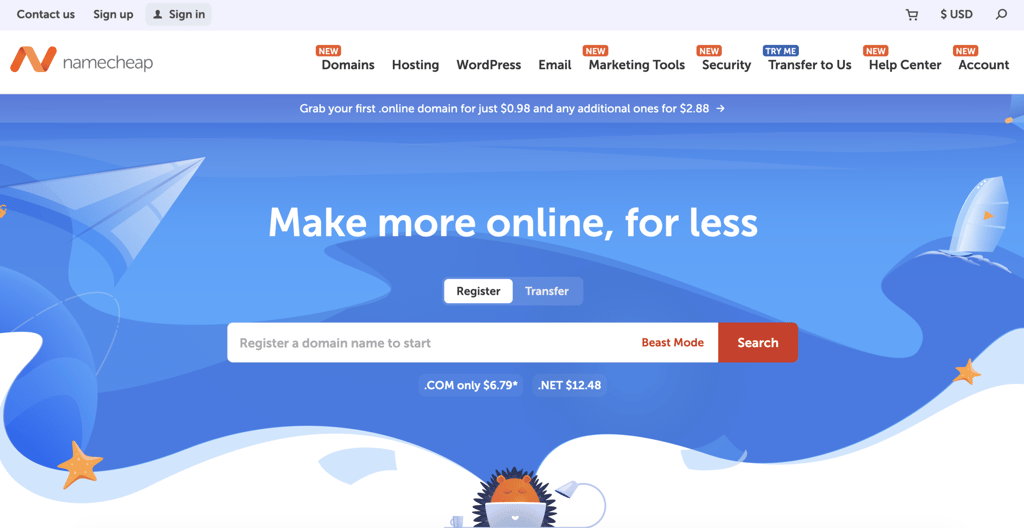
Namecheap is a popular domain registrar that also offers shared, WordPress, and VPS hosting. True to its name, it’s one of the most budget-friendly options, and its cheapest Stellar plan hosts up to three websites, which beats the single-site limit most rivals set at this price.
The free domain doesn’t cover .com domains. You get a discount on .com registration instead, while the free domain applies to less common extensions.
If you outgrow the Stellar plan, Stellar Plus hosts unlimited sites, and Stellar Business adds cloud storage and stronger security.
Key features:
- Host three websites. The cheapest plan covers them all.
- Free Supersonic CDN. A built-in CDN speeds up content delivery for your visitors.
- AI website tools. Namecheap includes AI tools that generate text and images to help you build a site.
- cPanel included. You get the familiar cPanel for managing sites, files, and email.
- Twice-weekly backups. Automatic backups run twice a week, so you have a recent restore point.
12. GoDaddy
Best for: beginners who want an all-in-one platform from a familiar brand.
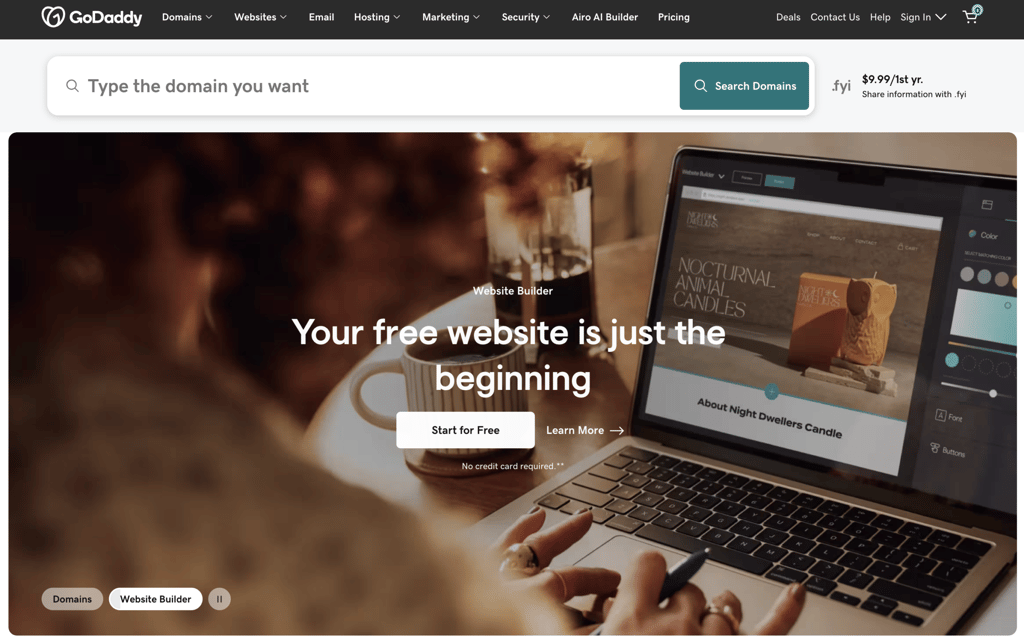
GoDaddy is a well-known all-in-one platform that’s handy for beginners who want to manage their domain, hosting, and email in one place. Its brand recognition makes it a common starting point, though its plans cost more than the market average.
The convenience comes at a premium, since GoDaddy’s hosting is priced higher than most. The entry-level Economy plan includes a free SSL certificate for the first year, but after that, it renews automatically at the regular price unless you cancel.
Some security tools, like firewalls and malware scanners, are also only available as short trials. They aren’t included with the plan.
Key features:
- GoDaddy Airo AI tools. Airo can generate a website, logo, and professional email from a short description of your business.
- Managed WordPress. GoDaddy offers WordPress plans with automatic updates and optimized performance.
- Integrated services. Manage your domains, email, and hosting from a single dashboard.
- Automatic daily backups. You can restore your account from the previous day if something goes wrong.
- 24/7 phone support. GoDaddy offers support over the phone.
How to choose the best web hosting service
To choose the best web hosting service, start with what your site needs, not the lowest price. A blog or portfolio runs fine on a basic shared plan, while a busy online store needs more storage and dedicated resources from a host like Scala Hosting.
Your platform matters too. For a WordPress site, a managed host such as Bluehost or SiteGround handles updates and security for you, while an all-in-one builder suits people who’d rather not touch code.
Cheap hosting is tempting, but value is the better measure. Before comparing monthly prices, check whether a free domain, SSL, email, and migrations are included.
Finally, pick a host you can grow with, since a good one lets you upgrade to cloud or VPS hosting and offers 24/7 support. Weighing these factors makes it easier to choose a web hosting provider that fits your project and budget.
What to do after getting web hosting?
After getting web hosting, your next steps are to set up a domain name and build your site. The domain is your website’s address, so it’s the first thing to lock in.
If you don’t have a domain yet, search for a domain name that fits your brand, then register it. Many hosts, including Hostinger, include a free domain for the first year, so check your plan before buying separately.
Domain Name Checker
Instantly check domain name availability.
A good domain name is short, easy to spell, and easy to remember, since people will type it and share it. Sticking with a .com extension also helps, as it’s the one most visitors expect.
Once your domain is ready, connect it to your hosting and choose how you’ll build your website, whether that’s WordPress or a website builder. From there, you can design your layout and publish your first pages.


Justina is a Content Writer passionate about marketing, with a background in social media and customer success management. She also loves reading books, traveling and exploring new places as well as cooking, and trying out new recipes. Follow her on LinkedIn.

Ariffud is a Technical Content Writer with an educational background in Informatics. He has extensive expertise in Linux and VPS, authoring over 200 articles on server management and web development. Follow him on LinkedIn.